§ Tag
Pet Training
Training isn't about obedience — it's about communication. The dog or cat is always learning whether you intend to teach or not. Force-free training methods give you control over what they learn. Every cue you teach is a small contract: I do X, then good things happen. Build enough small contracts and you have a relationship in which the human side of the communication is legible to the animal.
This tag collects the practical training guides — crate training a puppy without the "cry it out" method, teaching a recall that's reliable in real-life emergencies, loose-leash walking through the opposition reflex science, and cat carrier training that breaks the carrier-equals-vet conditioning. Each article gives the specific protocol week-by-week, identifies the common mistakes that poison the training, and rejects the equipment (prong collars, e-collars, choke chains, retractable leashes) that produces worse outcomes than the force-free alternatives.
The throughline across every training article: short consistent sessions beat long inconsistent ones. Sub-threshold practice beats over-threshold drilling. High-value rewards work better than people expect, and "treat-trained" dogs and cats are NOT spoiled — they're operating on the same operant-conditioning principles humans use in every workplace incentive system. The science is the same; the species just changes.
5 articles

dog-behavior · 12 min
Dog Calming Signals: 12 Signs and What to Do

dog-behavior · 8 min
Loose-Leash Walking: The Behavioral Science

dog-behavior · 9 min
How to Teach a Reliable Recall: Full Guide

dog-behavior · 9 min
Crate Training a Puppy: A Behaviorist's Guide
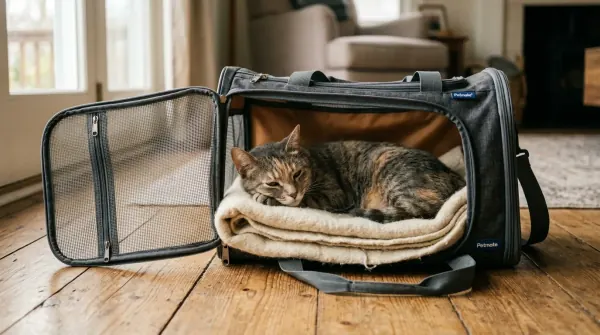
cat-behavior · 8 min
Cat Carrier Training That Doesn't Stress Cats