§ Category
Cat Behavior
Cats are harder to read than dogs. Their signals are subtler and easier to miss — a slow blink instead of a tail wag, an ear rotation instead of a play bow. Owners who try to read cats with dog frameworks often conclude their cat is "aloof" or "unaffectionate." Usually the cat is communicating exactly the same range of internal states. The signals are different.
This category teaches you to read them. Every article uses the framework certified feline behaviorists actually use — drawn from John Bradshaw's ethology research, Karen Overall's clinical reference, Sarah Ellis's training science. Third-person clinical voice. AVSAB-aligned. Zero "cats are just being cats" hand-waving.
What you'll find here: a full reference to cat body language (ears, eyes, whiskers, tail, posture, vocalization), the most common owner-search questions ("Why does my cat slow-blink at me?", "Why is my cat hiding under the bed?", "Why does my cat meow at night?"), the difference between normal solitary-species behavior and clinical stress, and the predator-prey framework that explains why your cat sitting with its back to you is actually a compliment.
Each article ends with the same offer: upload a photo of your cat and the AI returns a structured report drawing on the same framework. For daily reading practice, not for replacing a credentialed feline behaviorist (CCBC, IAABC Cat Division, or Dip. ACVB) on complex cases.
43 articles
10 min
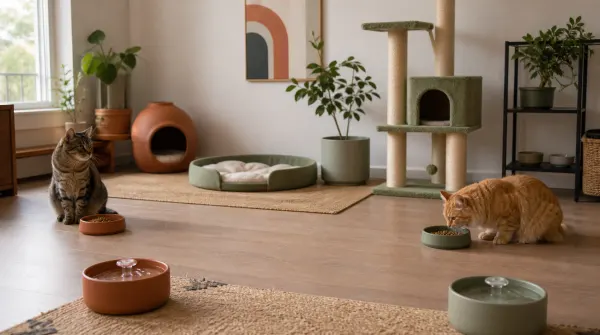
Resource Guarding in Cats: Quiet Signs and What Helps
Cats may guard food, litter boxes, doorways, resting spots or people without a fight. Learn the quiet signs and a force-free resource plan.
9 min
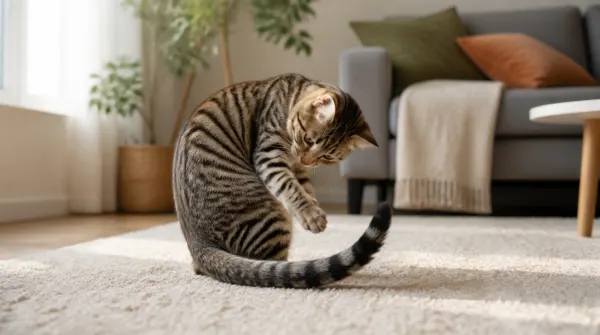
Why Do Cats Chase Their Tails? Play vs a Red Flag
Tail chasing may be brief play, but repeated attacks can point to itch, pain or feline hyperesthesia. Learn the signs that change the concern.
9 min
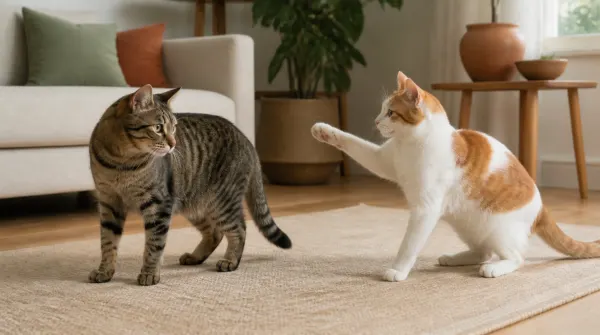
Why Do Cats Slap With Their Paws? Read the Context
Cats slap during play, touch, fear, pain and conflict. Learn how the target, trigger, claws and next movement change what a swat means.
9 min
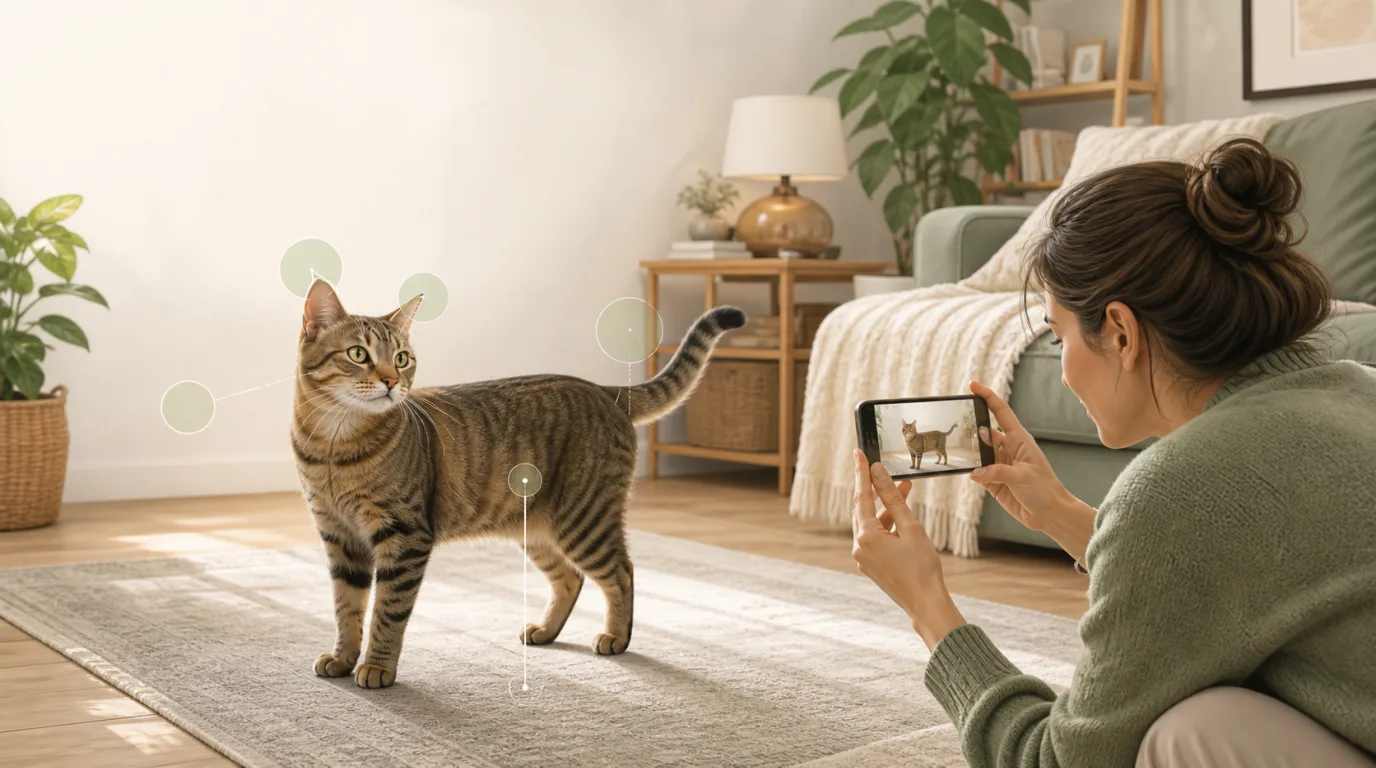
AI Cat Body Language Analyzer: Read Visible Signals
Upload a cat photo or short video for an AI body-language report covering ears, whiskers, posture and tail, with confidence and force-free next steps.

11 min
Cat Behavior Assessment Online: Options and Checklist
Compare Fe-BARQ, AI observations, and virtual cat behavior consultations. Learn what a good assessment includes and when a veterinarian comes first.
10 min
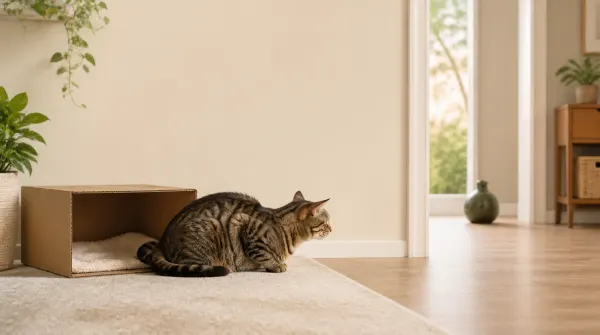
Cat Crouching Body Language: Fear, Hunting or Pain?
A crouching cat may be resting, stalking, frightened or painful. Compare posture, face, tail and context, plus signs that need urgent veterinary care.

10 min
Cat Hiding After Moving House: A Safe-Room Plan
A cat hiding after moving house is often overwhelmed, not rejecting you. Set up a safe room, track recovery and know when hiding needs veterinary help.
10 min
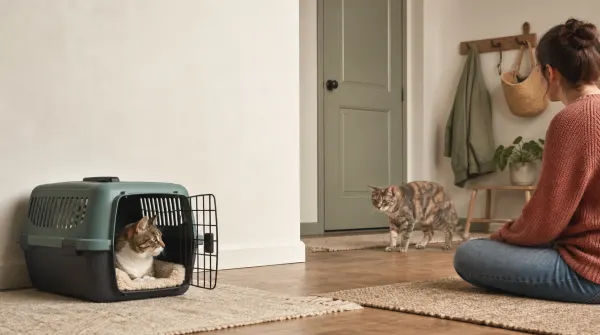
Cat Non-Recognition Aggression After the Vet: What Helps
When one cat returns from the vet, a housemate may hiss or attack. Learn safe separation, recovery, reintroduction and prevention steps.
11 min
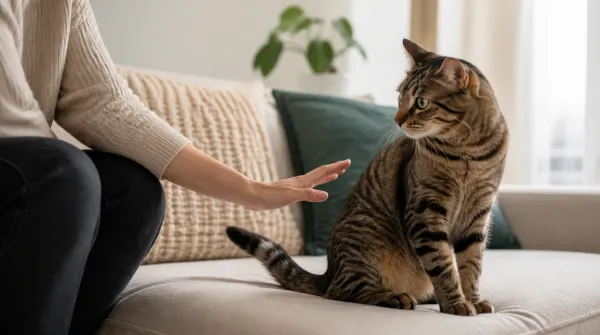
Overstimulated Cat: Warning Signs and What to Do
An overstimulated cat may flick the tail, ripple the skin, turn toward your hand, swat or bite. Learn the early signs and how to pause petting safely.

11 min
Cat Play Aggression: Stop Ambushes and Biting
Cat play aggression can look like stalking, ankle ambushes, grabbing and biting. Learn safer toy play, prevention and signs it may be something else.
10 min
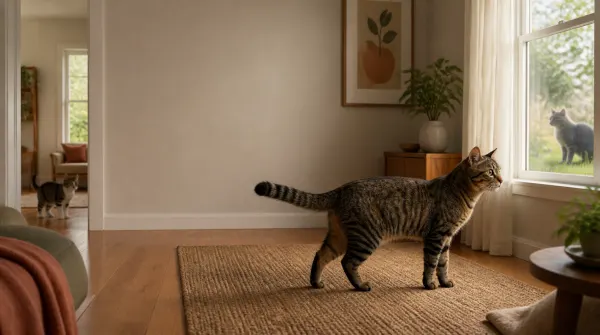
Redirected Aggression in Cats: What to Do Right Now
Redirected aggression can make a cat attack a nearby pet or person after another trigger. Learn immediate safety steps, recovery and reintroduction.
10 min
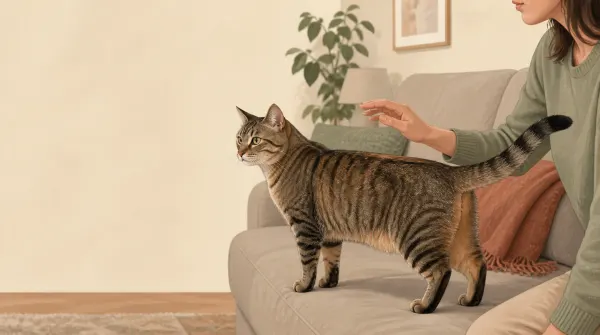
Why Does My Cat's Skin Ripple When I Pet Them?
A cat's skin may ripple when petted because of a normal touch reflex, overstimulation, itch or pain. Learn when twitching needs a veterinary check.
11 min
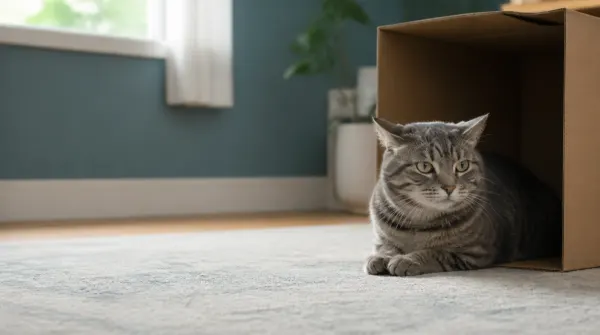
Cat Stress Signs: Acute Clues and Chronic Changes
Cat stress signs include tense posture, hiding, grooming, appetite and litter-box changes. Learn acute versus chronic clues and when to call a vet.
10 min
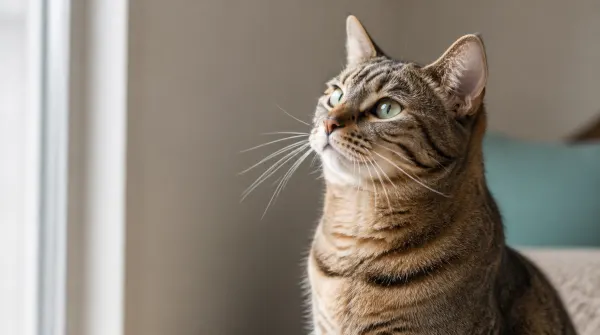
Cat Whisker Positions: Forward, Neutral and Back
Forward cat whiskers signal active focus, while whiskers drawn toward the cheeks often accompany withdrawal. Learn how context changes the read.
15 min
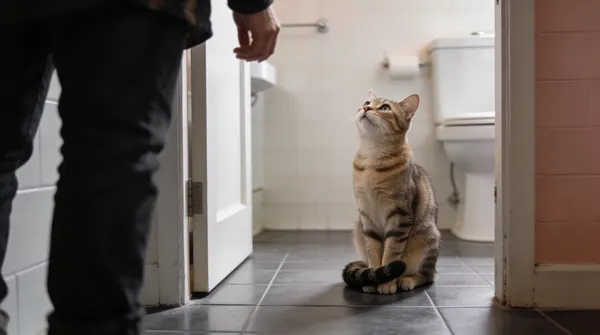
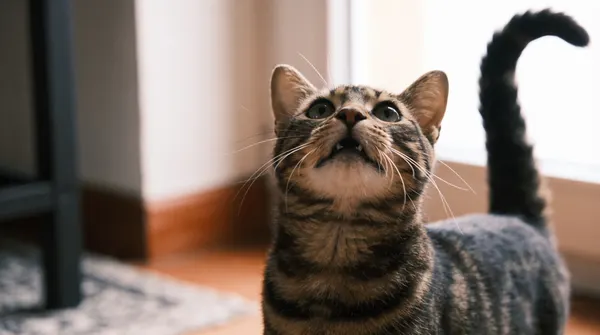
Why Does My Cat Follow Me to the Bathroom?
Cats follow you to the bathroom because of real attachment, the closed door, and resources kept there. How to tell normal shadowing from clinginess to check.
13 min
Cat Trilling: What That Chirpy Brrr Sound Means
Cat trilling is a closed-mouth, rising-pitch call inherited from queen-to-kitten communication. What the chirpy brrr means and how it differs from chatter.
15 min
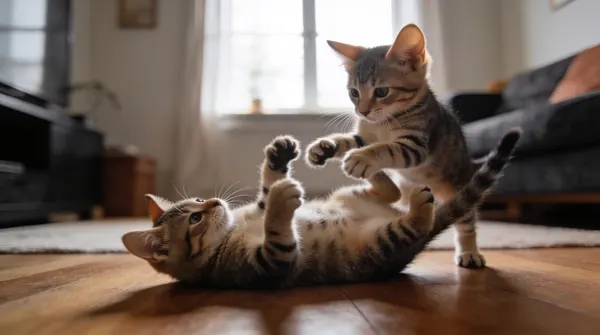
Playing or Fighting? How to Read Cat Wrestling
Playing or fighting? Read cat wrestling across nine channels — reciprocity, sound, ears, claws, bite inhibition — and the aftermath test that settles it.
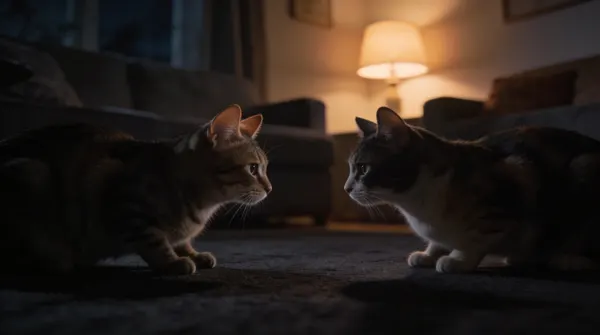
14 min
Why Do My Cats Fight at Night? Play vs Real Fighting
Cats may wrestle at night from rough play, normal activity or resource conflict. Use body language to tell play from real aggression and respond safely.
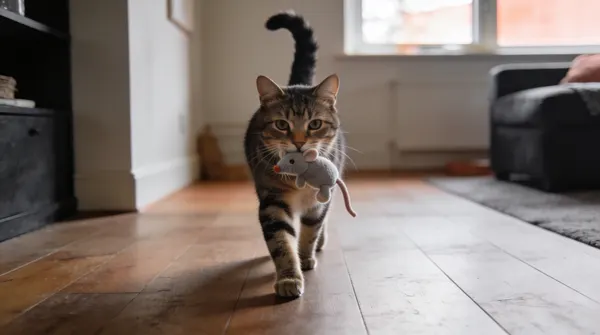
14 min
Why Does My Cat Bring Me Toys (and Yell)?
Cats bring toys and yowl because the predatory sequence runs to completion with a substitute object — not because they are gifting prey. What it means.
14 min
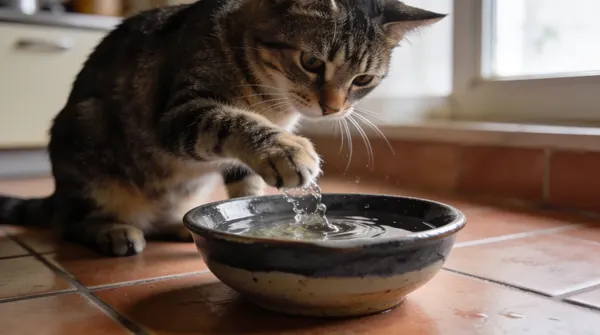
Why Does My Cat Play With Water? When to Worry
Cats may paw or splash water because of bowl design, curiosity or a moving-water preference. Learn when increased interest could signal illness.
14 min
Why Is My Cat Acting Weird? A Triage Guide
Why is my cat acting weird? A four-step triage: rule out medical first, audit environmental change, read the behavior, then intervene in order.

7 min
Multi-Cat Litter Box Rules: The N+1 Standard
The N+1 rule means one litter box per cat plus one extra. Learn how placement, box size, substrate and cleaning reduce conflict in multi-cat homes.
7 min
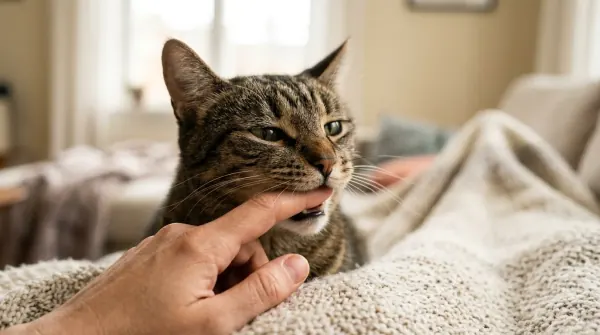
Cat Love Bites: Play, Overstim, or Warning?
Cat 'love bites' aren't affection — they signal petting-induced overstimulation, grooming gestures, or boundary-setting. Reading the body context tells you which.
8 min
The Kitten Socialization Window: 2-7 Weeks
The kitten socialization window is 2-7 weeks of age — earlier and shorter than puppies'. Most owners adopt their kitten after the sensitive period has already closed.

9 min
Siamese Cat Behavior: Personality and Care
Siamese cat behavior is highly vocal, intensely social, and dog-like in attachment. Siamese cats don't do well left alone and demand daily interactive engagement.
10 min
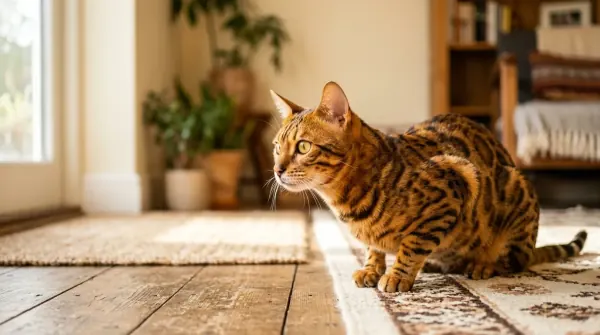
Bengal Cat Behavior: Personality and Care Guide
Bengal cat behavior demands substantial enrichment — high-energy, hybrid-origin, prey-driven, and vocal. This guide covers welfare, health, and daily care needs.
10 min
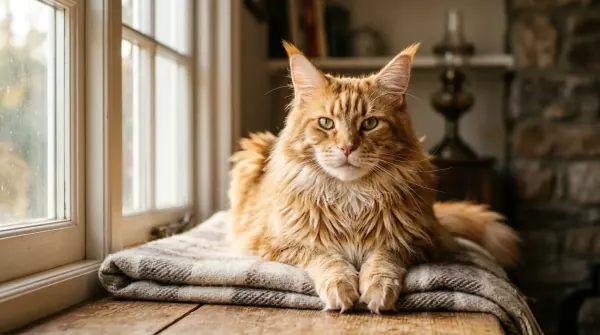
Maine Coon Behavior: Personality and Care Guide
Maine Coon behavior is gentle-giant social — highly interactive, dog-like, and vocal with trills rather than meows. This guide covers care, health, and enrichment.
8 min
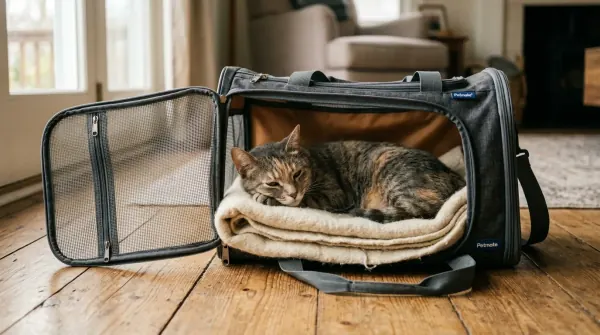
Cat Carrier Training That Doesn't Stress Cats
Cat carrier training reverses the vet-only association most cats form. A stepwise desensitization protocol turns the carrier into a neutral, then positive space.
6 min
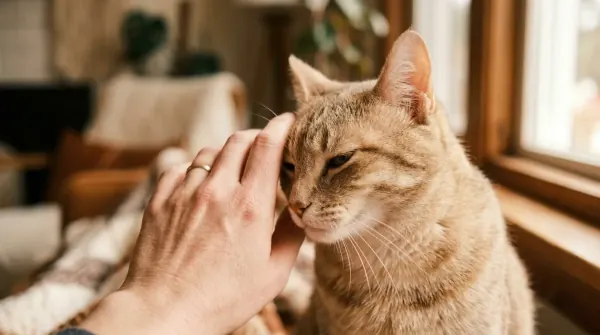
Cat Headbutting (Bunting): Meaning and Function
Cat headbutting — formally bunting — is one of the strongest affiliative signals cats give. It deposits pheromones, marks trust, and confirms social belonging.
9 min
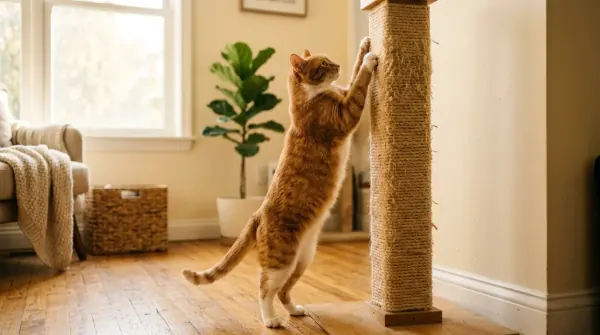
Cat Scratching Furniture: How to Redirect It
Cats scratch for four biological reasons — claw maintenance, stretching, scent marking, and stress release. Stopping it is impossible; redirection is achievable.
7 min
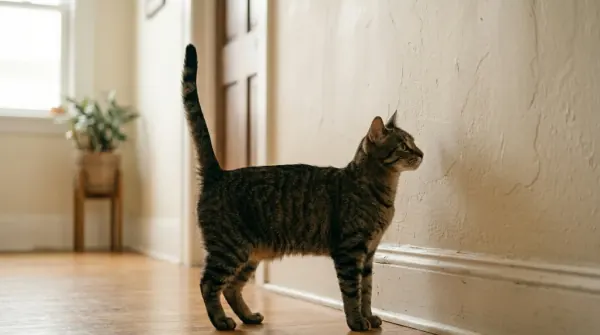
Cat Spraying vs Urinating: The Difference
Cat spraying is communicative marking — small volume, vertical surface, tail-up posture. Urination outside the box is different and is often medical, not behavioral.
10 min
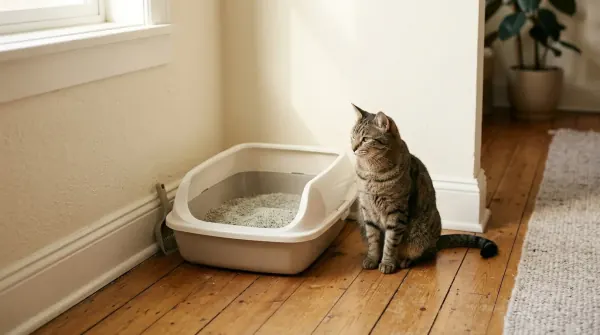
Why Is My Cat Peeing Outside the Litter Box?
Cats peeing outside the box is the #1 reason cats end up in shelters — and it's almost always solvable. Half of cases are medical.
9 min
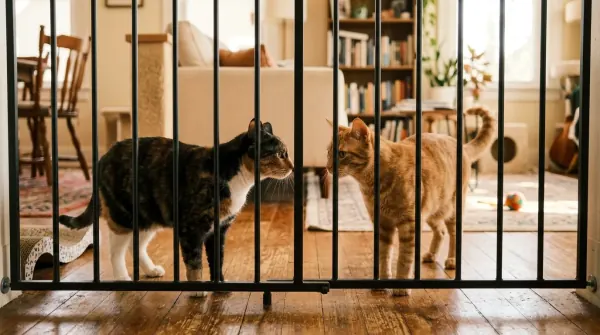
How to Introduce a New Cat to a Resident Cat
Cat introductions go wrong when rushed. Cats are solitary by nature — they must learn to share territory. A staged scent-and-sight protocol prevents lifelong tension.

10 min
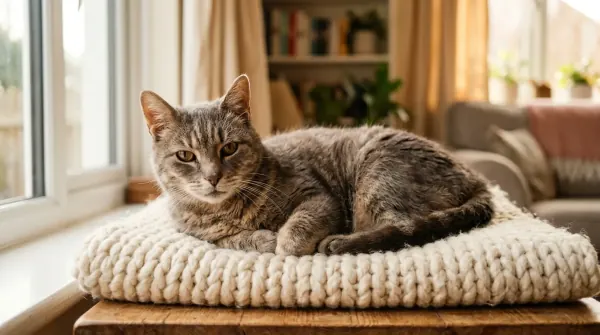
Persian Cat Behavior: Personality and Care
Persian cat behavior is calm, low-activity, and affiliative — but brachycephalic anatomy drives significant breed-specific grooming, dental, and respiratory needs.
9 min
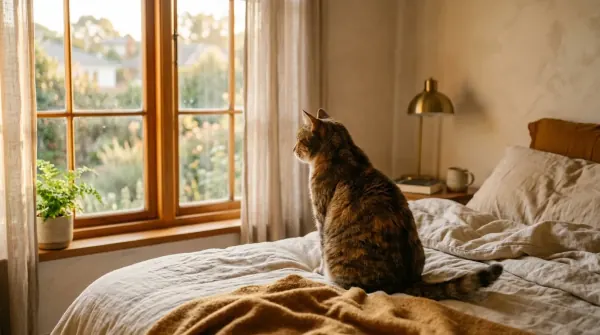
Behavior Change in Senior Cats: Medical First
Senior cat behavior change is almost always medical — hyperthyroidism, kidney disease, arthritis, and cognitive dysfunction all present as behavior change first.
6 min
Why Does My Cat Sit With Its Back to Me?
When a cat sits with its back to you, it's a documented high-trust signal — the opposite of what most humans assume, grounded in feline vigilance and predation.
6 min
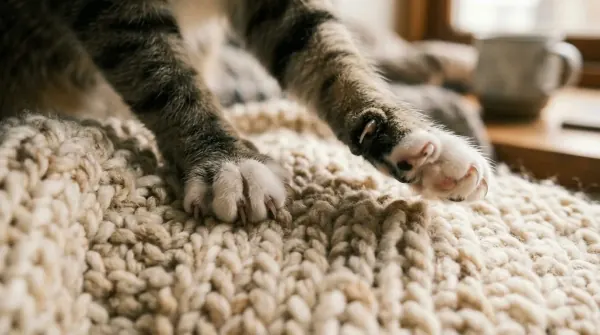
Cat Kneading Meaning: A Behaviorist Explains
Cat kneading — 'making biscuits' — is a retained kittenhood behavior linked to nursing. Adult cats keep it as a self-soothing, bonding, or territorial gesture.

8 min
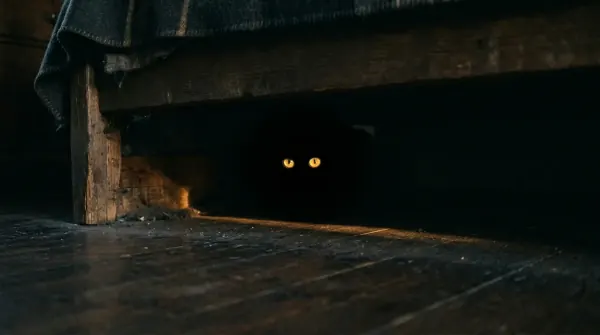
Cat Meowing at Night: 7 Causes and Fixes
Adult cats meow primarily at humans, and nighttime meowing has seven distinct causes — from boredom to hyperthyroidism. Here's how to tell which one applies.
7 min
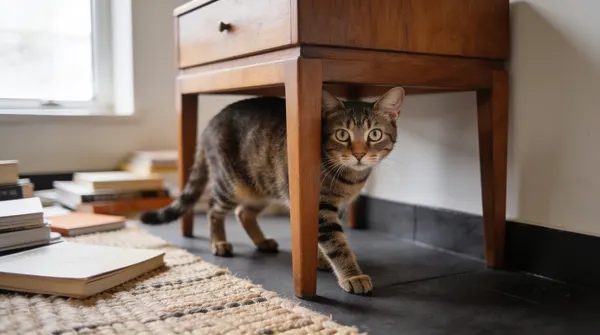
Cat Hiding Under the Bed: When to Intervene
Cats hide for two reasons — normal solitary-species retreat, or genuine stress. Duration, appetite, and litter-box use separate healthy from clinical hiding.

7 min
Cat Airplane Ears: What Flattened Ears Mean
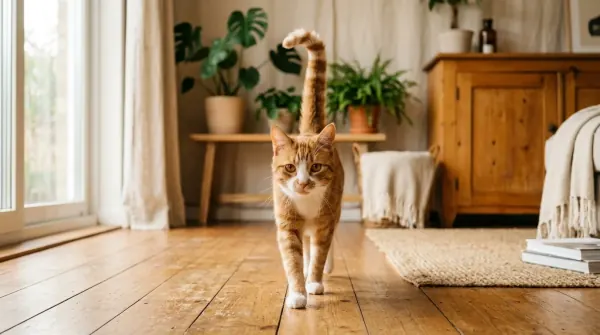
Cat airplane ears — flattened sideways like wings — can signal attentive listening, mild discomfort, or the first step before defensive arousal. Context decides.
8 min
Cat Tail Meanings: 8 Tail Positions Decoded
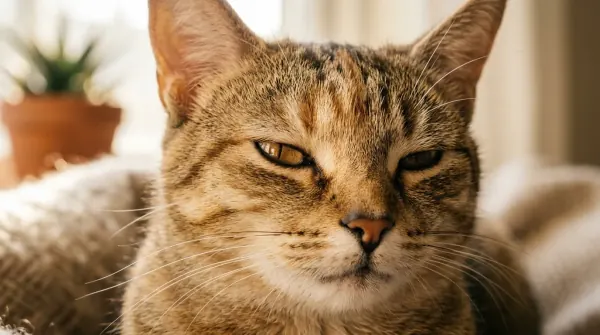
Cat tail positions are subtler than dog signals and more often misread. This guide decodes eight tail positions cats use and the emotional state behind each one.
8 min
Why Does My Cat Slow-Blink at Me? Explained
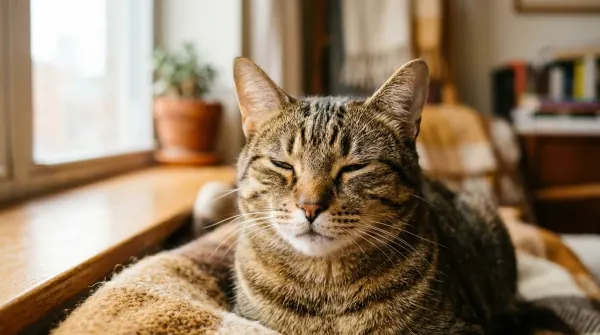
The cat slow-blink is a documented friendly signal. Recent peer-reviewed research found cats slow-blink more when humans do — and unfamiliar humans who.
13 min
Cat Body Language: A Vet-Behaviorist Guide
Cat body language runs on ear angle, pupil dilation, whisker carriage, tail position, and posture. Learn to read the signals cats give before they escalate.