§ Category
Dog Behavior
Dogs don't translate. They communicate through observable physical signals — ear position, eye softness, tail carriage, lip line, posture, weight distribution. A board-certified behaviorist reads at least fifteen of these markers before drawing a conclusion. Most owners read three. This category is where that gap closes.
Every article uses the same framework PetTranslator.ai uses when it analyzes your photo. Third-person clinical voice. AVSAB-aligned, force-free interpretation throughout. Zero tolerance for dominance theory, "alpha" framing, or any other research-rejected training mythology.
What you'll find here: a full reference to dog body language signals (ears, eyes, mouth, tail, posture, vocalization), the most common owner-search questions ("Why does my dog stare at me?", "Why is my dog following me everywhere?", "Why does my dog yawn when not tired?"), the stress-signal escalation ladder that lets you catch discomfort before it becomes growling or biting, and the science of separation anxiety as a clinical syndrome distinct from generic "missing you" behavior.
Each article ends with the same offer: upload a photo of your dog and the AI returns a structured report drawing on the framework you've just read. Not as a substitute for working with a credentialed behaviorist on serious cases — as a daily reading-practice tool for owners who want to build the skill of seeing what's actually happening.
56 articles

9 min
Do Dogs Fake Injuries? Rule Out Pain First
Dogs can repeat a behavior that earns attention, but an inconsistent limp can still hurt. Learn what to record and when your dog needs a vet.

7 min
Why Do Dogs Cross Their Paws? Resting Pose vs Gait Problem
Crossed front paws are often a comfortable resting pose. Learn why that differs from crossing, scuffing or weakness while a dog walks.

9 min
Why Does My Dog Sit Alone in Another Room?
A dog may choose a quiet room to rest, but sudden isolation can accompany pain, fear or illness. Compare normal solitude with warning signs.
9 min
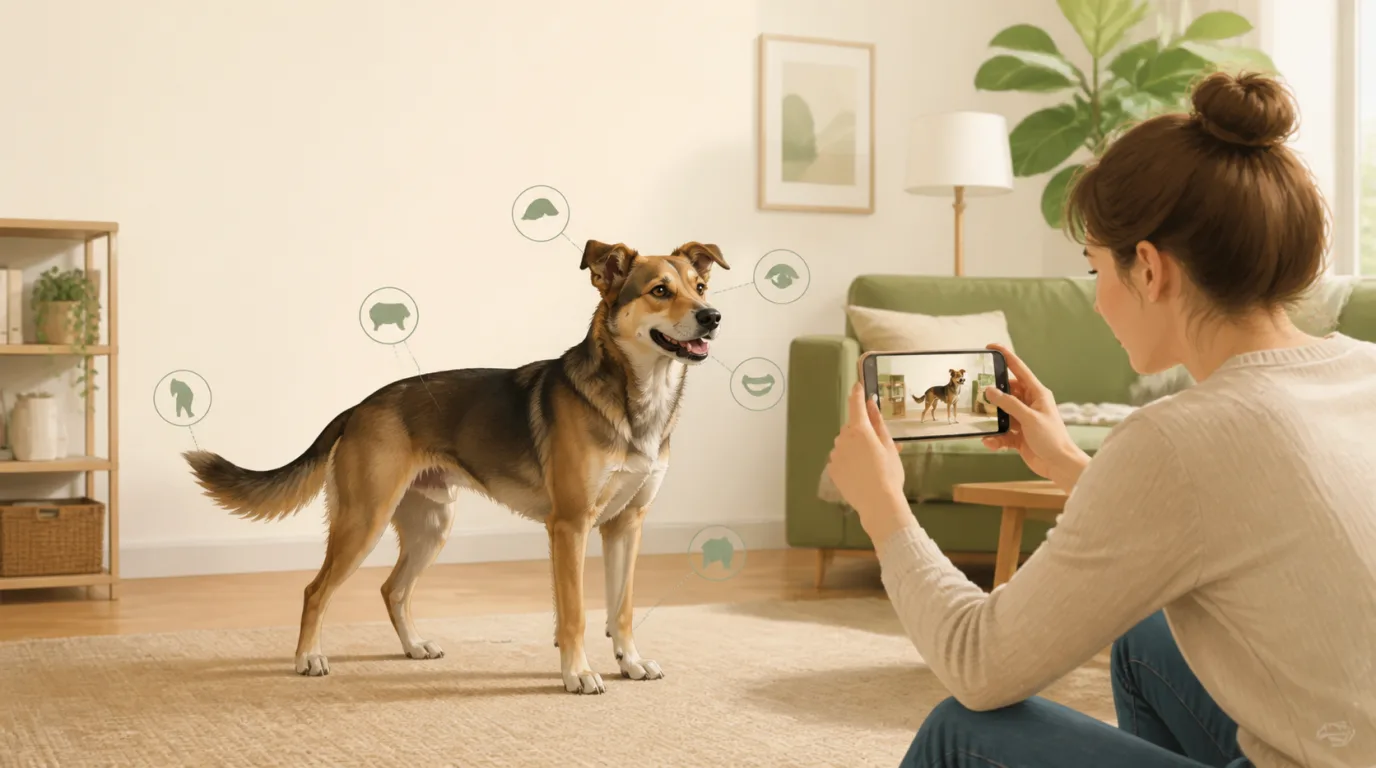
AI Dog Body Language Analyzer: Read Visible Signals
Upload a dog photo or short video for an AI body-language report with visible markers, context, confidence and force-free next steps. Start with 3 free.

12 min
Dog Calming Signals: 12 Signs and What to Do
Dog calming signals and appeasement gestures include looking away, lip licking, yawning and low posture. Learn how context changes their meaning.

10 min
Dog Consent Test for Petting: A Safer Start-Stop Check
A dog petting consent test uses brief touch and a pause to see whether the dog re-engages. Learn the signs to continue, stop, or call a vet.
10 min
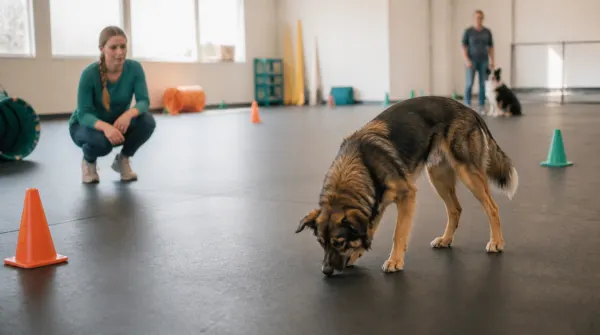
Dog Displacement Behaviors: Context Changes the Meaning
Dogs may suddenly sniff, scratch, groom or yawn when conflicted or uncertain. Learn how to recognize displacement behavior and respond without punishment.
10 min
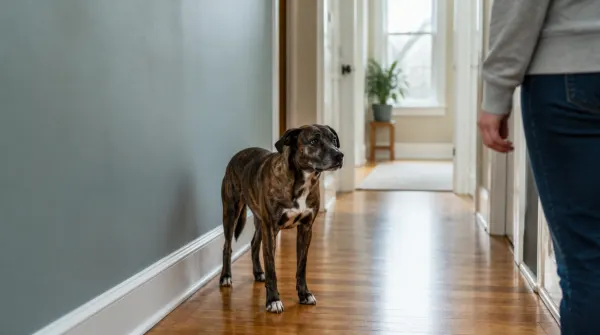
Dog Freezing Body Language: Fear, Focus or Warning?
A dog freeze can signal fear, intense focus, pain or rising bite risk. Learn how to spot tense stillness, read the context and respond safely.

9 min
Dog Paw Lift Meaning: Stress, Pointing or Pain?
A dog lifting one front paw may signal uncertainty, pointing, anticipation or pain. Learn how posture, context and walking reveal the difference.

9 min
Dog Sniffing the Ground: Stress Signal or Normal Exploring?
Ground sniffing is usually normal, but sudden sniffing can appear during stress or conflict. Learn how timing, posture and recovery change the meaning.
10 min
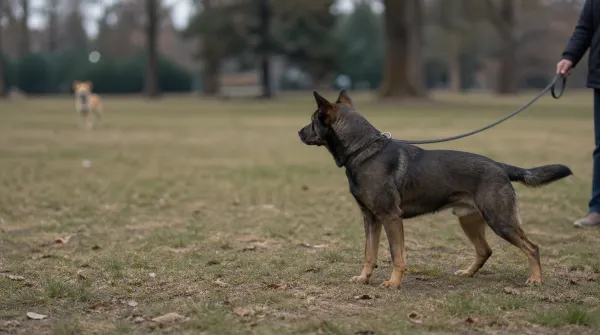
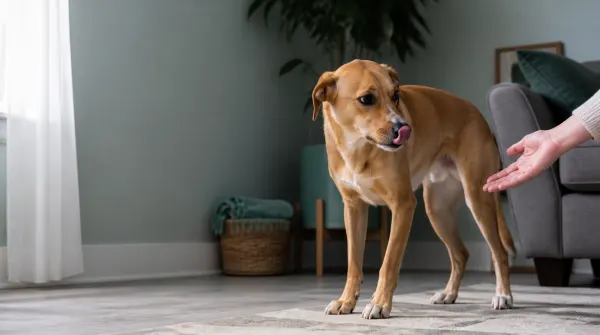
Dog Stiff Body Language: Tension, Warning or Pain?
A stiff dog body can reflect fear, intense focus, social tension or pain. Learn how weight, gaze, movement and context reveal the safer next step.
10 min
Dog Stress Ladder: Signs From Uneasy to Bite Risk
A dog stress ladder maps subtle discomfort, avoidance, freezing, growling and bite risk. Learn what each level means and when to create distance.

10 min
Trigger Stacking in Dogs: Signs, Recovery and Prevention
Trigger stacking happens when stressors arrive before a dog recovers. Learn the warning signs, what to do, and why recovery has no fixed 72-hour rule.

14 min
Chihuahua Behavior: The Complete Guide
Chihuahua behavior is a normally wired dog in a very small body — reframing the aggression stereotype, trembling, under-socialization, and dental pain.

14 min
Dachshund Behavior: The Complete Guide
Dachshund behavior is scent-hound tenacity in a long-backed body — alert barking, digging, independent training style, and why IVDD pain reads as attitude.

14 min
Dog Barking in Sleep: Normal Dreaming or a Seizure?
Sleep barking and twitching are usually normal REM activity. Compare relaxed dream movements with seizure warning signs and know when to call your vet.
12 min
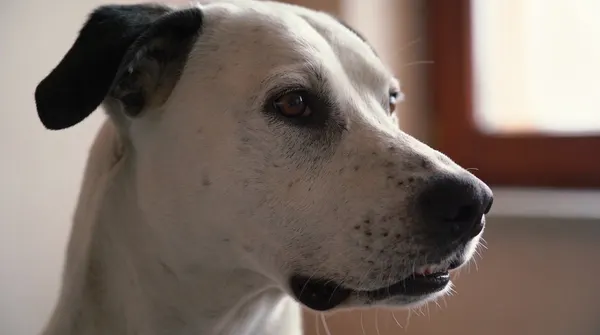
Dog Ears Back: What 5 Ear Positions Actually Signal
Dog ears back doesn't automatically mean fear. Five ear positions, what each signals, why breed ear-set changes the read, and how to build a baseline.
16 min
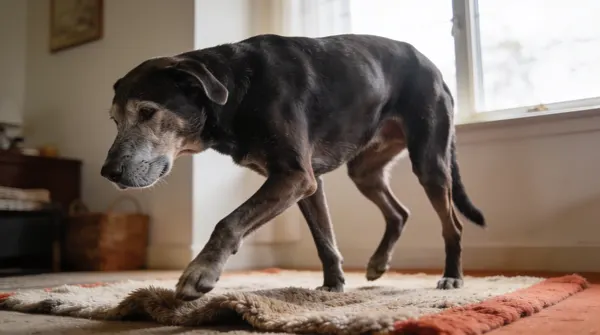
Why Does My Dog Groan When He Lies Down?
Dogs groan when lying down for two different reasons: contentment or pain. Timing, descent speed, and how the dog rises tell you which one you're hearing.
13 min
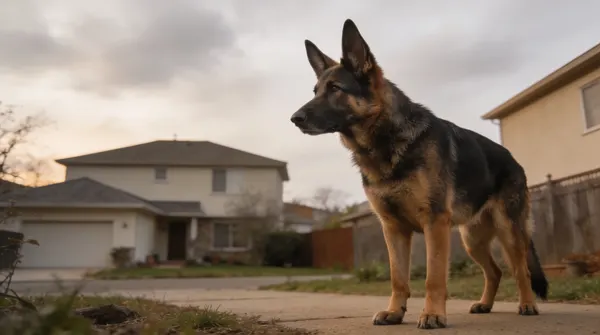
German Shepherd Behavior: The Complete Guide
German Shepherd behavior is driven by working drive and handler focus — covering vigilance misread as aggression, line differences, and pain-first reading.

19 min
Is My Dog Depressed? Signs, Causes, Triage
Dog depression isn't a veterinary diagnosis — but withdrawal, appetite loss, and sleeping more are real signals. A vet-first triage guide to the causes.
13 min
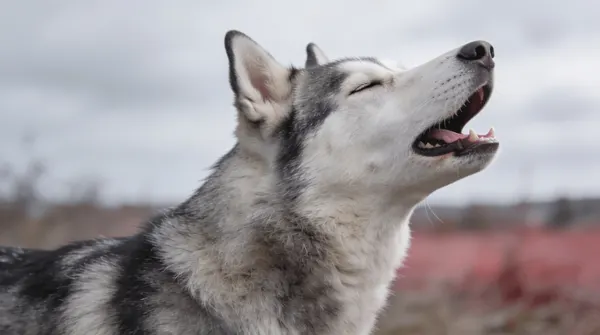
Siberian Husky Behavior Guide: Why They're So Vocal
Siberian Husky behavior explained: why they howl and talk, why recall fails, the escape drive, and why low biddability is design, not disobedience.
14 min
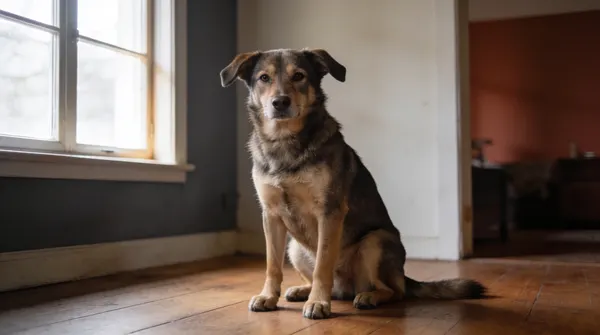
What Is My Dog Trying to Tell Me? A Signal Guide
Dogs don't speak in sentences — they signal internal state through ears, eyes, tail, and posture. A behaviorist framework for reading what your dog means.
17 min
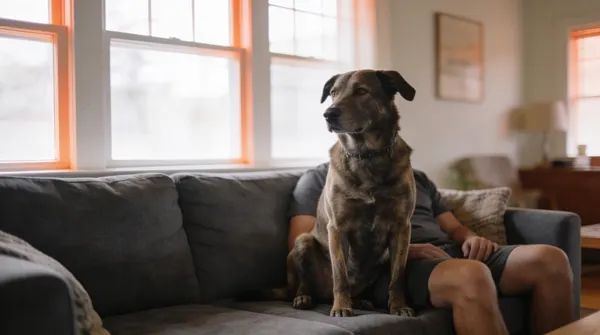
Why Does My Dog Sit on Me? 6 Real Reasons
Dogs sit on you for six distinct reasons: affiliative contact, anxiety, warmth, learned attention-seeking, guarding, and habit. How to tell them apart safely.

20 min
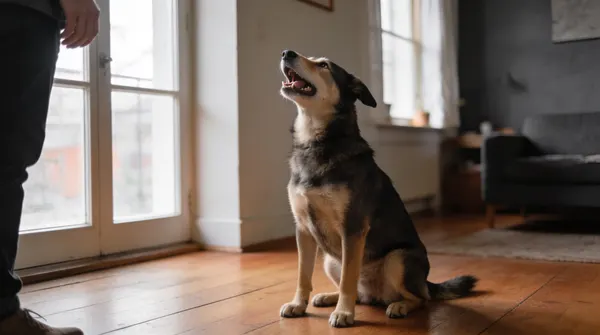
Why Does My Dog Sleep Between My Legs?
Dogs sleep between your legs for four separable reasons: warmth, enclosed-space security, attachment, and learned habit. How to tell which one drives yours.
14 min
Why Does My Dog Whine So Much? 6 Whine Types
Dog whining is six different behaviors, not one. Learn to tell demand whining from pain, anxiety, excitement, appeasement, and cognitive decline.
7 min
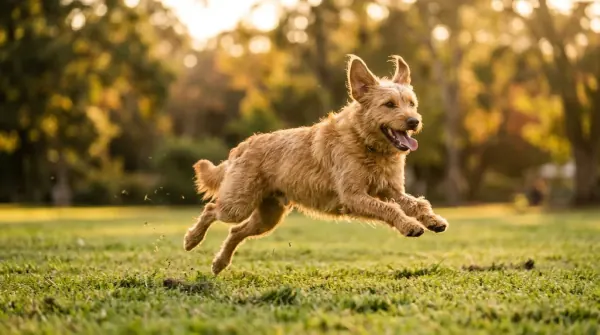
Dog Zoomies Explained: The Behavioral
Zoomies (FRAPs) are normal canine arousal regulation — bursts of high-energy running that release pent-up energy. Marc Bekoff coined the term.

7 min
Why Does My Dog Show Belly? All 5 Reasons
Dogs expose their belly for five different reasons — appeasement, trust, thermoregulation, play, scratching. Reading the body context separates them.

7 min
Why Does My Dog Tilt Their Head? Explained
Dog head tilts have three functional explanations — sound localization, visual field correction around the muzzle, and reading human facial expression cues.
8 min
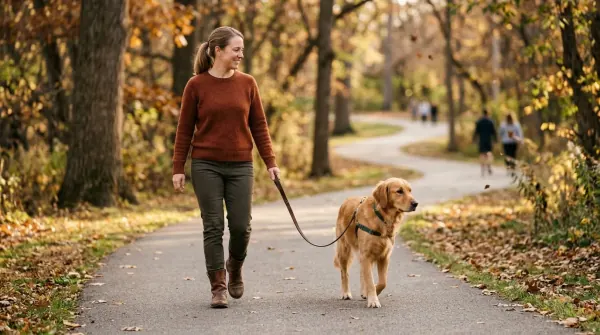
Loose-Leash Walking: The Behavioral Science
Dogs pull because pulling works. Loose-leash walking reverses that contingency through force-free protocols — no jerks, no corrections, no aversive tools required.

9 min
Travel Anxiety in Pets: Car Rides and Beyond
Pet travel anxiety has 5 distinct triggers — motion, confinement, novelty, destination, predeparture cues. Each responds to different interventions.
9 min
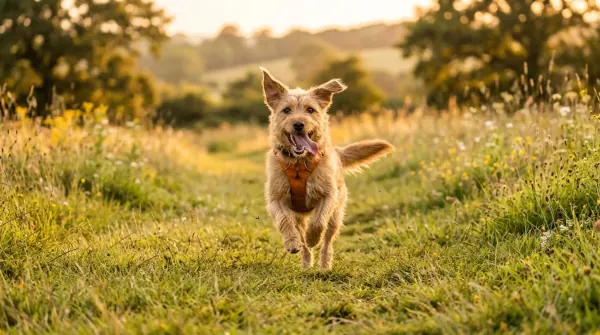
How to Teach a Reliable Recall: Full Guide
Recall is the highest-stakes behavior dogs learn. Two rules are non-negotiable: never punish after the dog comes, and never repeat the recall word once you've used it.

9 min
Crate Training a Puppy: A Behaviorist's Guide
Crate training a puppy works only when the crate becomes a positive space, not a punishment chamber. The 'cry it out' method creates lifelong negative associations.

9 min
Poodle Behavior: Personality, Training, and Care
Poodle behavior reflects a highly intelligent water-retriever working breed — not a 'frou-frou' lapdog. Standard, Miniature, and Toy Poodles all share the wiring.

10 min
Labrador Retriever Behavior, Personality
Labrador Retrievers are food-motivated, water-loving, retrieve-driven working dogs with straightforward body language and specific breed-related health.
9 min
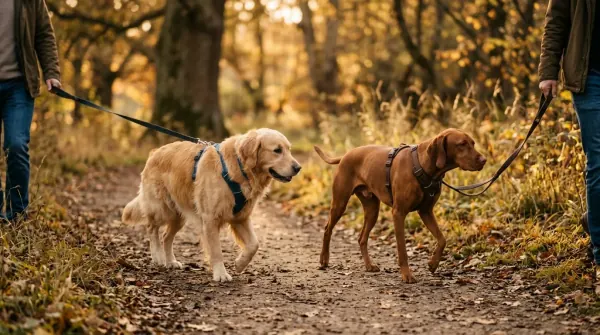
How to Introduce a New Dog to a Resident Dog
Dog introductions are easier than cat introductions, but not as forgiving as the 'throw them in the yard' method suggests. Neutral ground and pacing matter most.

10 min
French Bulldog Behavior: Personality and Health
French Bulldog behavior is affectionate, low-energy, and companion-oriented — but brachycephalic anatomy and spinal issues shape realistic daily care requirements.

10 min
Golden Retriever Behavior, Personality
Golden Retrievers are highly social, food-motivated, biddable dogs with specific breed-related behavior patterns and health concerns.

9 min
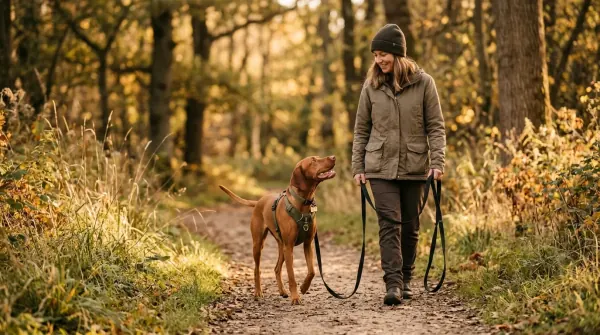
Pain Signals in Older Dogs: What to Watch
Older dogs hide pain — it's a survival adaptation, and owners chronically under-detect it. Learn the postural, behavioral, and facial signs vets use to score it.
10 min
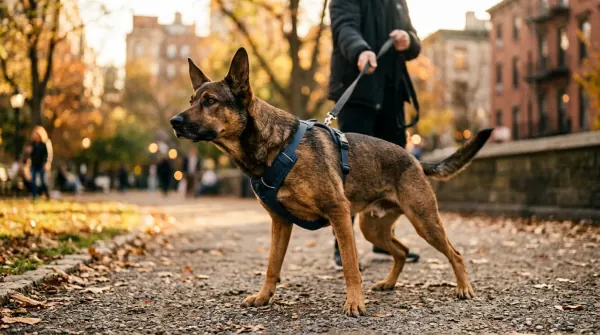
Leash Reactivity in Dogs: Causes and Fixes
Leash reactivity is the most common form of dog reactivity — and almost always misunderstood. It's a frustration or fear response, not dominance or defiance.
10 min
Reactive Dog vs Aggressive Dog: The Difference
Reactive dogs show big responses to triggers but rarely intend harm. Aggressive dogs are willing to escalate to harmful contact. Reading the signals precisely matters.

10 min
Dog Resource Guarding: Signs, Causes
Resource guarding is normal canine behavior — it has a survival logic. It becomes a problem when it escalates to biting in shared-living contexts.

9 min
Puppy Biting: Why It's Normal and What Helps
Puppy biting is normal and developmentally necessary — puppies learn bite inhibition through play. This guide covers what to redirect, what to ignore, and when to worry.

10 min
The Puppy Socialization Window: 3-14 Weeks
The puppy socialization window (3-14 weeks) is one of the most evidence-based periods in dog behavior. What's learned during this window sticks for life.

9 min
Puppy Body Language: How Puppy Signals
Puppy body language differs from adult dog signaling — signals are exaggerated, calming sequences are incomplete, play dominates the repertoire.

10 min
Cognitive Dysfunction in Senior Dogs: Signs
Canine Cognitive Dysfunction is the dog Alzheimer's — affecting 14-35% of dogs over 8 and widely under-diagnosed. Learn the DISHAA warning signs to catch it early.

9 min
Senior Dog Behavior Changes: Medical First
Senior dog behavior changes mimic anxiety or stubbornness but are usually medical — arthritis, cognitive dysfunction, hearing loss, or organ decline sitting underneath.

7 min
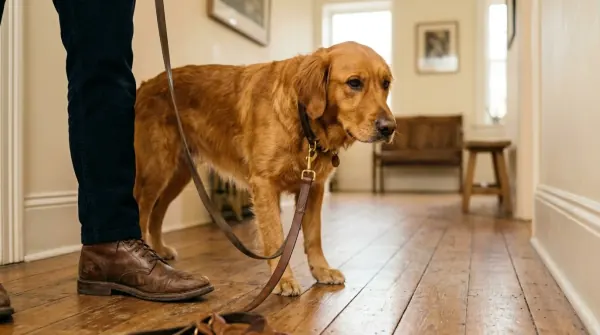
Dog Pacing at Night: Causes and Triage Steps
Nighttime dog pacing has six distinct causes — cognitive dysfunction, pain, anxiety, medication effect, sundowning, and unmet needs. Age is the first triage filter.
7 min
Why Does My Dog Follow Me Everywhere? Signs
Most dog-following behavior is normal social bonding. Some isn't — the kind that comes with anxiety markers when you leave the room.

10 min
Dog Separation Anxiety: Signs and Treatment
Dog separation anxiety is a clinical syndrome, not 'missing you.' Systematic desensitization and, when indicated, medication are the only interventions that work.

9 min
12 Signs Your Dog Is Stressed: Early Signals
Dog stress shows up in 12 specific physical signals most owners miss — because they appear before the loud ones. Here's how to read each one early.

6 min
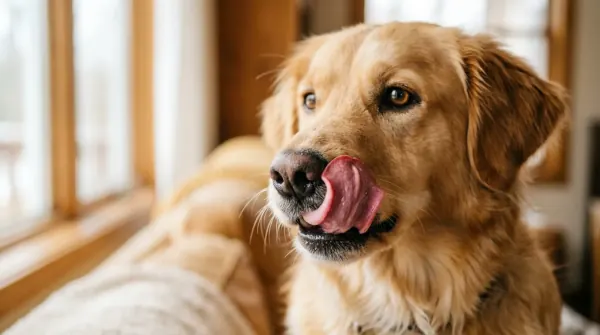
Dog Yawning When Not Tired: The Real Reason
Out-of-context dog yawning is almost always a calming signal — a small displacement behavior that appears when a dog feels low-grade stress or social pressure.
7 min
Dog Lip Licking: Stress Signal or Anticipation
Most dog lip licking isn't hunger — it's a displacement signal that appears when a dog feels mild stress or uncertainty. Reading context tells you which cue applies.

7 min
Whale Eye in Dogs: An Early Stress Signal
Whale eye — the visible half-moon of white around a dog's iris — is one of the earliest stress signals dogs show. It routinely precedes growls, snaps, and bites.

9 min
Dog Tail Position Chart: Full Reference Guide
Dog tail position carries more information than the wag. A full reference to tail heights, motions, and stiffness — and the emotional state behind each one.

11 min
Why Is My Dog Staring at Me? Soft Gaze vs Hard Stare
A dog's stare may be social, learned, predatory or a warning. Compare soft eyes with a hard stare and learn when to give space or call a vet.

12 min
Dog Body Language: A Vet-Behaviorist Guide
Dog body language runs on ears, eyes, tail, lip line, posture, and weight distribution. Learn the signal sequence dogs use before escalating to a growl or bite.