§ Blog
Behavior notes.
Behaviorist-grade guides to dog and cat body language, stress signals, and the science behind what your pet is actually communicating. Every article cites primary sources. No dominance theory.
§ Foundation guides
Start here.

training-science · 12 min
Do Pet Translator Apps Really Work? An Honest Answer
Do dog and pet translator apps really work? Most generate entertainment captions. Learn their limits and how body-language analysis differs.

cat-behavior · 13 min
Cat Body Language: A Vet-Behaviorist Guide
Cat body language runs on ear angle, pupil dilation, whisker carriage, tail position, and posture. Learn to read the signals cats give before they escalate.

dog-behavior · 12 min
Dog Body Language: A Vet-Behaviorist Guide
Dog body language runs on ears, eyes, tail, lip line, posture, and weight distribution. Learn the signal sequence dogs use before escalating to a growl or bite.
§ Library
Every article (109)

dog-behavior · 9 min
Do Dogs Fake Injuries? Rule Out Pain First
Dogs can repeat a behavior that earns attention, but an inconsistent limp can still hurt. Learn what to record and when your dog needs a vet.

cat-behavior · 10 min
Resource Guarding in Cats: Quiet Signs and What Helps
Cats may guard food, litter boxes, doorways, resting spots or people without a fight. Learn the quiet signs and a force-free resource plan.
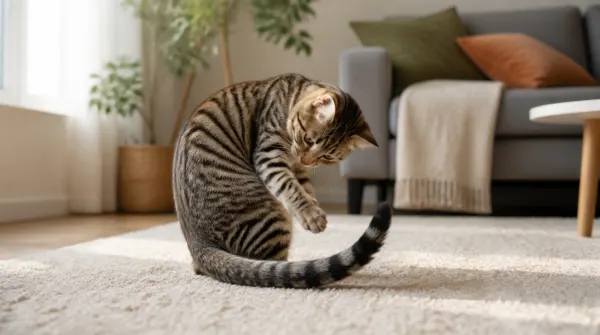
cat-behavior · 9 min
Why Do Cats Chase Their Tails? Play vs a Red Flag
Tail chasing may be brief play, but repeated attacks can point to itch, pain or feline hyperesthesia. Learn the signs that change the concern.
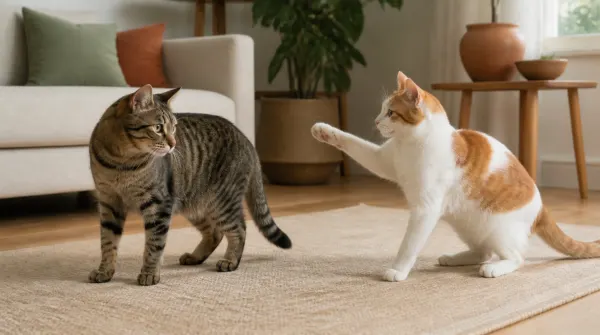
cat-behavior · 9 min
Why Do Cats Slap With Their Paws? Read the Context
Cats slap during play, touch, fear, pain and conflict. Learn how the target, trigger, claws and next movement change what a swat means.

dog-behavior · 7 min
Why Do Dogs Cross Their Paws? Resting Pose vs Gait Problem
Crossed front paws are often a comfortable resting pose. Learn why that differs from crossing, scuffing or weakness while a dog walks.

dog-behavior · 9 min
Why Does My Dog Sit Alone in Another Room?
A dog may choose a quiet room to rest, but sudden isolation can accompany pain, fear or illness. Compare normal solitude with warning signs.
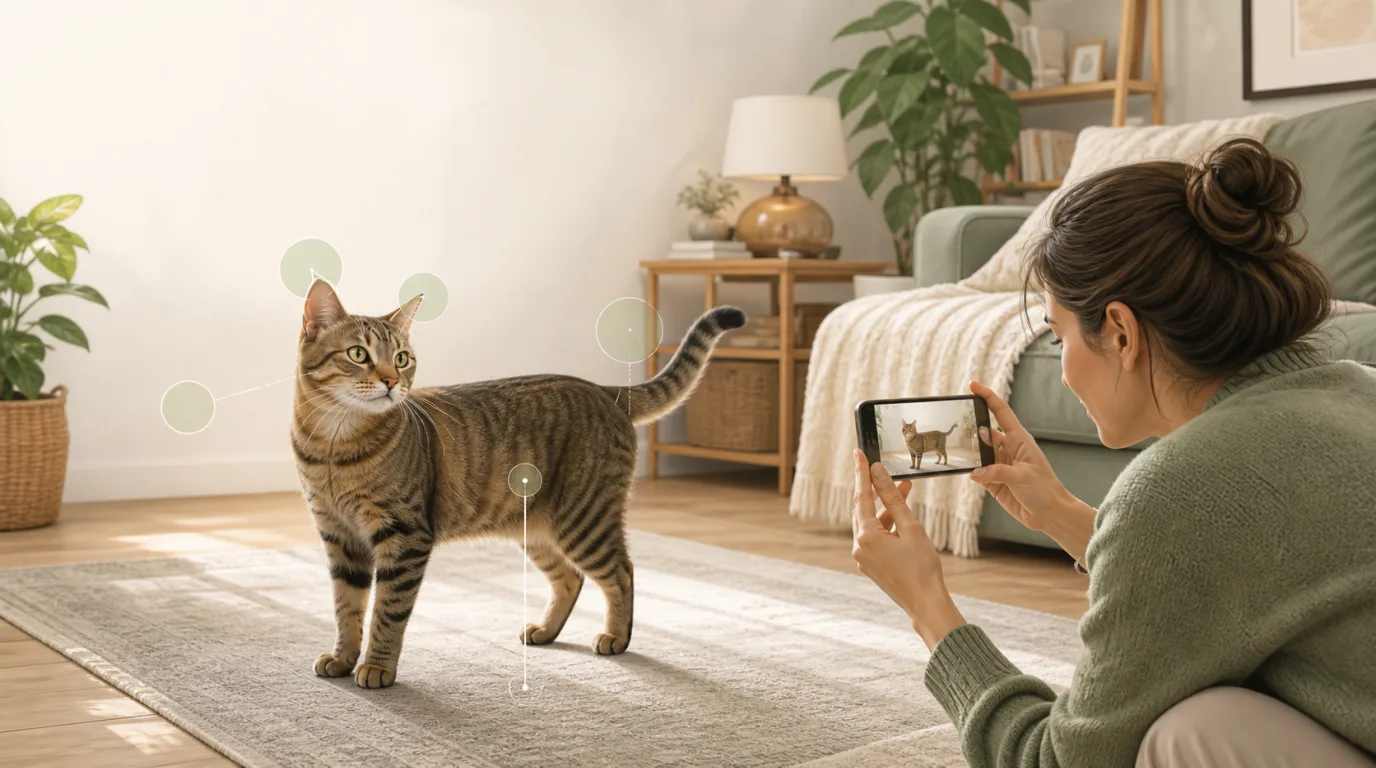
cat-behavior · 9 min
AI Cat Body Language Analyzer: Read Visible Signals
Upload a cat photo or short video for an AI body-language report covering ears, whiskers, posture and tail, with confidence and force-free next steps.

dog-behavior · 9 min
AI Dog Body Language Analyzer: Read Visible Signals
Upload a dog photo or short video for an AI body-language report with visible markers, context, confidence and force-free next steps. Start with 3 free.

cat-behavior · 11 min
Cat Behavior Assessment Online: Options and Checklist
Compare Fe-BARQ, AI observations, and virtual cat behavior consultations. Learn what a good assessment includes and when a veterinarian comes first.
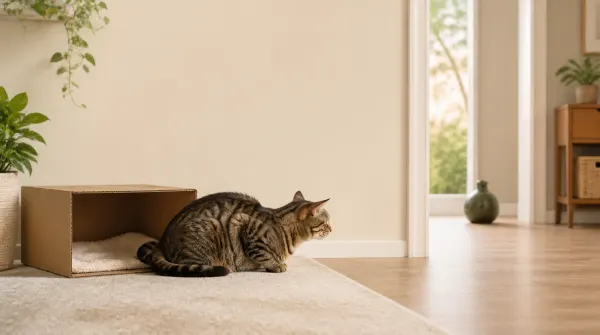
cat-behavior · 10 min
Cat Crouching Body Language: Fear, Hunting or Pain?
A crouching cat may be resting, stalking, frightened or painful. Compare posture, face, tail and context, plus signs that need urgent veterinary care.

cat-behavior · 10 min
Cat Hiding After Moving House: A Safe-Room Plan
A cat hiding after moving house is often overwhelmed, not rejecting you. Set up a safe room, track recovery and know when hiding needs veterinary help.
cat-behavior · 10 min
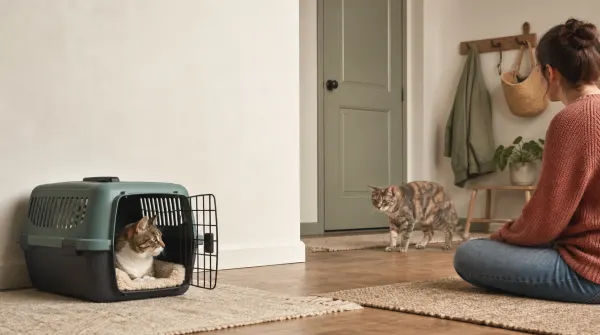
Cat Non-Recognition Aggression After the Vet: What Helps
When one cat returns from the vet, a housemate may hiss or attack. Learn safe separation, recovery, reintroduction and prevention steps.

cat-behavior · 11 min
Overstimulated Cat: Warning Signs and What to Do
An overstimulated cat may flick the tail, ripple the skin, turn toward your hand, swat or bite. Learn the early signs and how to pause petting safely.

cat-behavior · 11 min
Cat Play Aggression: Stop Ambushes and Biting
Cat play aggression can look like stalking, ankle ambushes, grabbing and biting. Learn safer toy play, prevention and signs it may be something else.
cat-behavior · 10 min
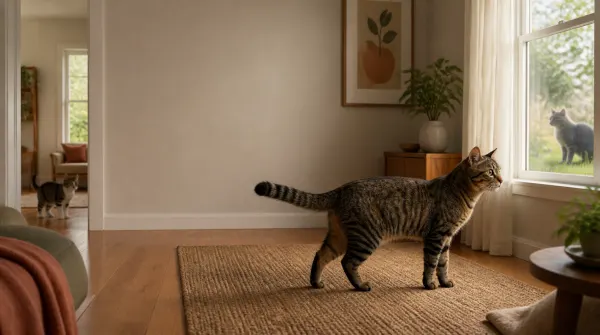
Redirected Aggression in Cats: What to Do Right Now
Redirected aggression can make a cat attack a nearby pet or person after another trigger. Learn immediate safety steps, recovery and reintroduction.
cat-behavior · 10 min
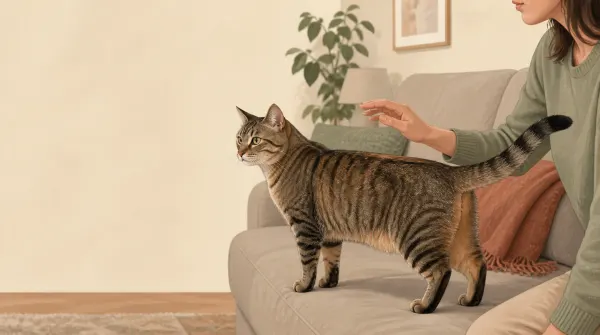
Why Does My Cat's Skin Ripple When I Pet Them?
A cat's skin may ripple when petted because of a normal touch reflex, overstimulation, itch or pain. Learn when twitching needs a veterinary check.

cat-behavior · 11 min
Cat Stress Signs: Acute Clues and Chronic Changes
Cat stress signs include tense posture, hiding, grooming, appetite and litter-box changes. Learn acute versus chronic clues and when to call a vet.

cat-behavior · 10 min
Cat Whisker Positions: Forward, Neutral and Back
Forward cat whiskers signal active focus, while whiskers drawn toward the cheeks often accompany withdrawal. Learn how context changes the read.

dog-behavior · 12 min
Dog Calming Signals: 12 Signs and What to Do
Dog calming signals and appeasement gestures include looking away, lip licking, yawning and low posture. Learn how context changes their meaning.

dog-behavior · 10 min
Dog Consent Test for Petting: A Safer Start-Stop Check
A dog petting consent test uses brief touch and a pause to see whether the dog re-engages. Learn the signs to continue, stop, or call a vet.
dog-behavior · 10 min
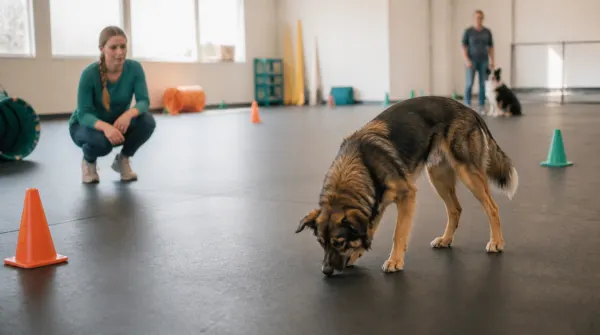
Dog Displacement Behaviors: Context Changes the Meaning
Dogs may suddenly sniff, scratch, groom or yawn when conflicted or uncertain. Learn how to recognize displacement behavior and respond without punishment.

dog-behavior · 10 min
Dog Freezing Body Language: Fear, Focus or Warning?
A dog freeze can signal fear, intense focus, pain or rising bite risk. Learn how to spot tense stillness, read the context and respond safely.

dog-behavior · 9 min
Dog Paw Lift Meaning: Stress, Pointing or Pain?
A dog lifting one front paw may signal uncertainty, pointing, anticipation or pain. Learn how posture, context and walking reveal the difference.

dog-behavior · 9 min
Dog Sniffing the Ground: Stress Signal or Normal Exploring?
Ground sniffing is usually normal, but sudden sniffing can appear during stress or conflict. Learn how timing, posture and recovery change the meaning.
dog-behavior · 10 min
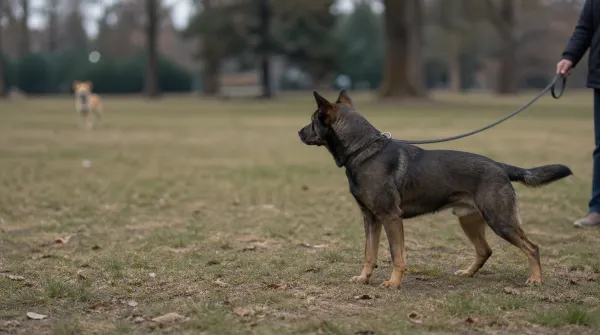
Dog Stiff Body Language: Tension, Warning or Pain?
A stiff dog body can reflect fear, intense focus, social tension or pain. Learn how weight, gaze, movement and context reveal the safer next step.
dog-behavior · 10 min
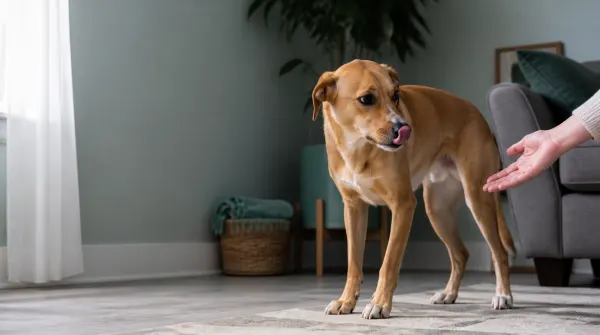
Dog Stress Ladder: Signs From Uneasy to Bite Risk
A dog stress ladder maps subtle discomfort, avoidance, freezing, growling and bite risk. Learn what each level means and when to create distance.

training-science · 10 min
Dog Training Threshold: Under, Near and Over Explained
A dog's training threshold is where flexible responses begin to narrow around a trigger. Learn the signs and how to adjust distance, duration and difficulty.

dog-behavior · 10 min
Trigger Stacking in Dogs: Signs, Recovery and Prevention
Trigger stacking happens when stressors arrive before a dog recovers. Learn the warning signs, what to do, and why recovery has no fixed 72-hour rule.

training-science · 10 min
Pet Behavior Journal App: What to Track and Why
Use a pet behavior journal app to record context, body language, and change over time. Learn the fields that matter, tracking mistakes, and vet red flags.

training-science · 9 min
Pet Behavior Photo Analysis: Choose a Useful Image
Learn what pet behavior photo analysis can observe, how to choose a useful dog or cat image, when video is better and where AI interpretation stops.

training-science · 10 min
Pet Behavior Report for Your Vet: What to Record
Create a useful pet behavior report for a veterinary visit. Record timing, triggers, visible signs, health changes, and safe video without guessing a diagnosis.

training-science · 11 min
Pet Stress Tracker: What Apps and Wearables Can Tell You
Compare pet stress tracker apps, behavior logs, and wearables. Learn what stress scores can measure, how to build a baseline, and when to call a vet.
cat-behavior · 15 min
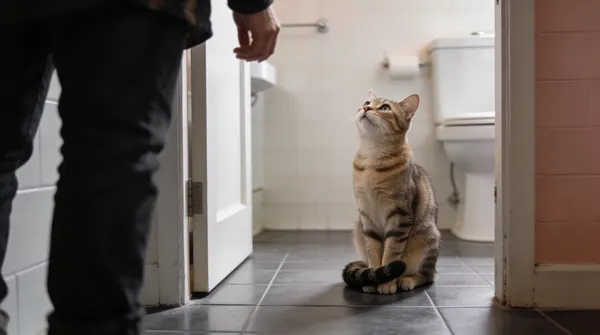
Why Does My Cat Follow Me to the Bathroom?
Cats follow you to the bathroom because of real attachment, the closed door, and resources kept there. How to tell normal shadowing from clinginess to check.
cat-behavior · 13 min
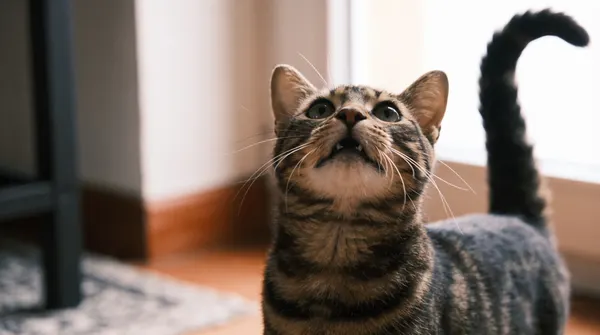
Cat Trilling: What That Chirpy Brrr Sound Means
Cat trilling is a closed-mouth, rising-pitch call inherited from queen-to-kitten communication. What the chirpy brrr means and how it differs from chatter.
cat-behavior · 15 min
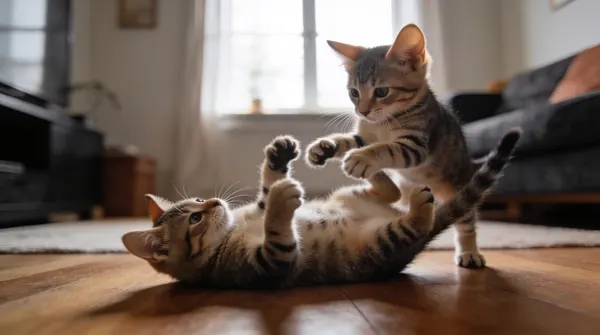
Playing or Fighting? How to Read Cat Wrestling
Playing or fighting? Read cat wrestling across nine channels — reciprocity, sound, ears, claws, bite inhibition — and the aftermath test that settles it.

dog-behavior · 14 min
Chihuahua Behavior: The Complete Guide
Chihuahua behavior is a normally wired dog in a very small body — reframing the aggression stereotype, trembling, under-socialization, and dental pain.

dog-behavior · 14 min
Dachshund Behavior: The Complete Guide
Dachshund behavior is scent-hound tenacity in a long-backed body — alert barking, digging, independent training style, and why IVDD pain reads as attitude.

dog-behavior · 14 min
Dog Barking in Sleep: Normal Dreaming or a Seizure?
Sleep barking and twitching are usually normal REM activity. Compare relaxed dream movements with seizure warning signs and know when to call your vet.
dog-behavior · 12 min
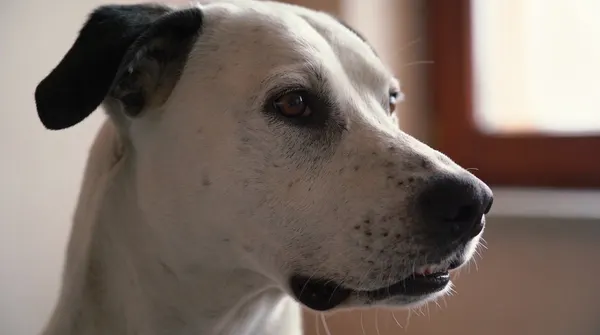
Dog Ears Back: What 5 Ear Positions Actually Signal
Dog ears back doesn't automatically mean fear. Five ear positions, what each signals, why breed ear-set changes the read, and how to build a baseline.
dog-behavior · 16 min
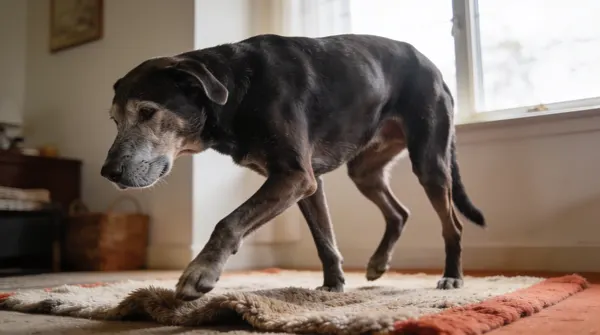
Why Does My Dog Groan When He Lies Down?
Dogs groan when lying down for two different reasons: contentment or pain. Timing, descent speed, and how the dog rises tell you which one you're hearing.
dog-behavior · 13 min
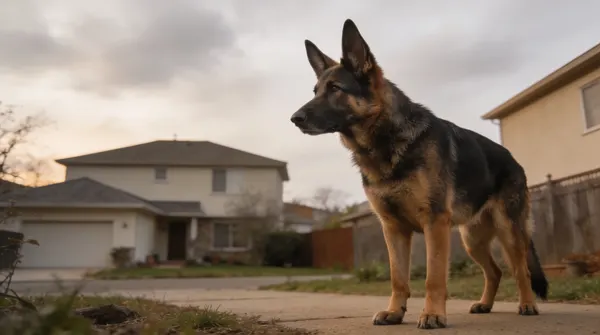
German Shepherd Behavior: The Complete Guide
German Shepherd behavior is driven by working drive and handler focus — covering vigilance misread as aggression, line differences, and pain-first reading.

dog-behavior · 19 min
Is My Dog Depressed? Signs, Causes, Triage
Dog depression isn't a veterinary diagnosis — but withdrawal, appetite loss, and sleeping more are real signals. A vet-first triage guide to the causes.

training-science · 23 min
Dog Behavior Assessment Online: Options and Costs
Compare online dog behavior questionnaires, AI observation reports and live virtual assessments. Learn credentials, costs, limits and when a vet is needed.
dog-behavior · 13 min
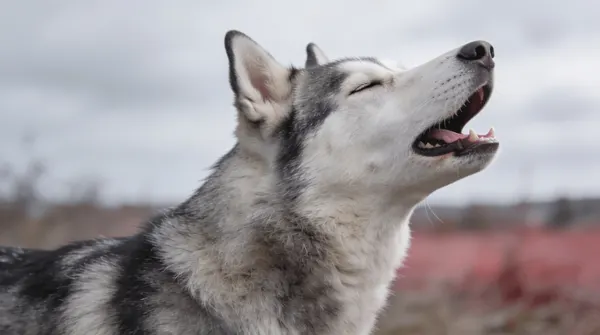
Siberian Husky Behavior Guide: Why They're So Vocal
Siberian Husky behavior explained: why they howl and talk, why recall fails, the escape drive, and why low biddability is design, not disobedience.

dog-behavior · 14 min
What Is My Dog Trying to Tell Me? A Signal Guide
Dogs don't speak in sentences — they signal internal state through ears, eyes, tail, and posture. A behaviorist framework for reading what your dog means.

cat-behavior · 14 min
Why Do My Cats Fight at Night? Play vs Real Fighting
Cats may wrestle at night from rough play, normal activity or resource conflict. Use body language to tell play from real aggression and respond safely.
cat-behavior · 14 min
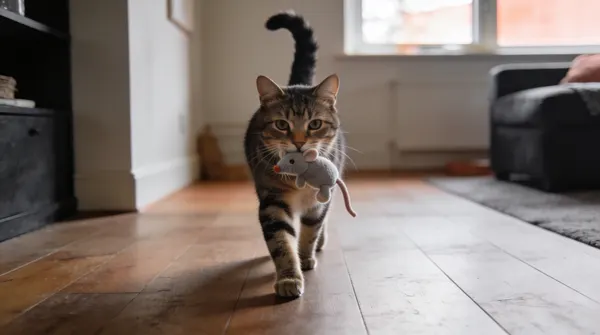
Why Does My Cat Bring Me Toys (and Yell)?
Cats bring toys and yowl because the predatory sequence runs to completion with a substitute object — not because they are gifting prey. What it means.

cat-behavior · 14 min
Why Does My Cat Play With Water? When to Worry
Cats may paw or splash water because of bowl design, curiosity or a moving-water preference. Learn when increased interest could signal illness.
dog-behavior · 17 min
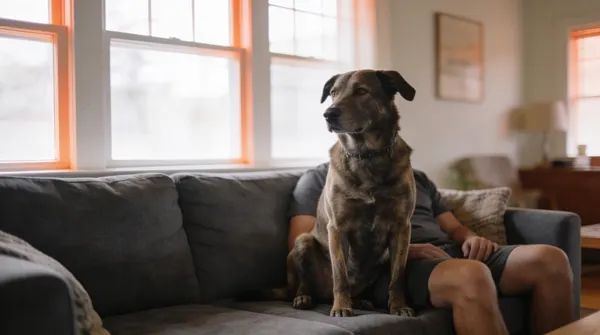
Why Does My Dog Sit on Me? 6 Real Reasons
Dogs sit on you for six distinct reasons: affiliative contact, anxiety, warmth, learned attention-seeking, guarding, and habit. How to tell them apart safely.

dog-behavior · 20 min
Why Does My Dog Sleep Between My Legs?
Dogs sleep between your legs for four separable reasons: warmth, enclosed-space security, attachment, and learned habit. How to tell which one drives yours.
dog-behavior · 14 min
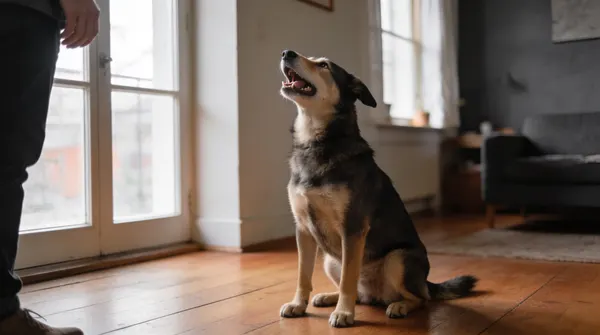
Why Does My Dog Whine So Much? 6 Whine Types
Dog whining is six different behaviors, not one. Learn to tell demand whining from pain, anxiety, excitement, appeasement, and cognitive decline.

cat-behavior · 14 min
Why Is My Cat Acting Weird? A Triage Guide
Why is my cat acting weird? A four-step triage: rule out medical first, audit environmental change, read the behavior, then intervene in order.

cat-behavior · 7 min
Multi-Cat Litter Box Rules: The N+1 Standard
The N+1 rule means one litter box per cat plus one extra. Learn how placement, box size, substrate and cleaning reduce conflict in multi-cat homes.

dog-behavior · 7 min
Dog Zoomies Explained: The Behavioral
Zoomies (FRAPs) are normal canine arousal regulation — bursts of high-energy running that release pent-up energy. Marc Bekoff coined the term.
cat-behavior · 7 min
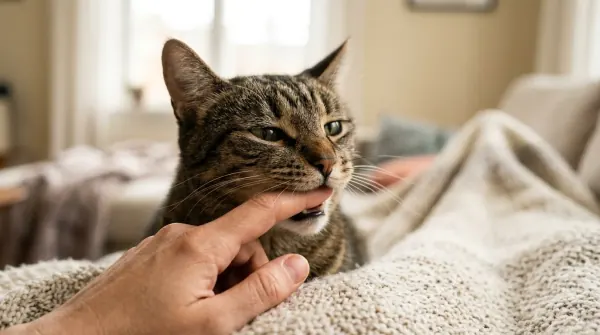
Cat Love Bites: Play, Overstim, or Warning?
Cat 'love bites' aren't affection — they signal petting-induced overstimulation, grooming gestures, or boundary-setting. Reading the body context tells you which.

dog-behavior · 7 min
Why Does My Dog Show Belly? All 5 Reasons
Dogs expose their belly for five different reasons — appeasement, trust, thermoregulation, play, scratching. Reading the body context separates them.

dog-behavior · 7 min
Why Does My Dog Tilt Their Head? Explained
Dog head tilts have three functional explanations — sound localization, visual field correction around the muzzle, and reading human facial expression cues.

cat-behavior · 8 min
The Kitten Socialization Window: 2-7 Weeks
The kitten socialization window is 2-7 weeks of age — earlier and shorter than puppies'. Most owners adopt their kitten after the sensitive period has already closed.
dog-behavior · 8 min
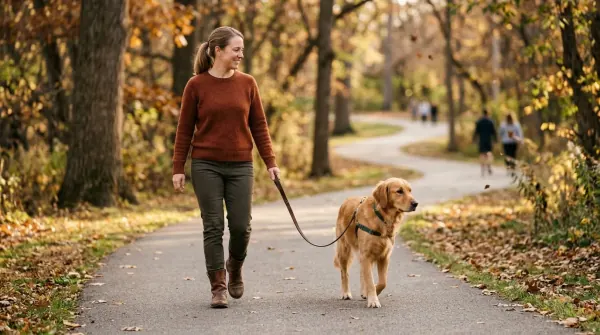
Loose-Leash Walking: The Behavioral Science
Dogs pull because pulling works. Loose-leash walking reverses that contingency through force-free protocols — no jerks, no corrections, no aversive tools required.

dog-behavior · 9 min
Travel Anxiety in Pets: Car Rides and Beyond
Pet travel anxiety has 5 distinct triggers — motion, confinement, novelty, destination, predeparture cues. Each responds to different interventions.

dog-behavior · 9 min
How to Teach a Reliable Recall: Full Guide
Recall is the highest-stakes behavior dogs learn. Two rules are non-negotiable: never punish after the dog comes, and never repeat the recall word once you've used it.

dog-behavior · 9 min
Crate Training a Puppy: A Behaviorist's Guide
Crate training a puppy works only when the crate becomes a positive space, not a punishment chamber. The 'cry it out' method creates lifelong negative associations.

dog-behavior · 9 min
Poodle Behavior: Personality, Training, and Care
Poodle behavior reflects a highly intelligent water-retriever working breed — not a 'frou-frou' lapdog. Standard, Miniature, and Toy Poodles all share the wiring.

cat-behavior · 9 min
Siamese Cat Behavior: Personality and Care
Siamese cat behavior is highly vocal, intensely social, and dog-like in attachment. Siamese cats don't do well left alone and demand daily interactive engagement.

cat-behavior · 10 min
Bengal Cat Behavior: Personality and Care Guide
Bengal cat behavior demands substantial enrichment — high-energy, hybrid-origin, prey-driven, and vocal. This guide covers welfare, health, and daily care needs.

cat-behavior · 10 min
Maine Coon Behavior: Personality and Care Guide
Maine Coon behavior is gentle-giant social — highly interactive, dog-like, and vocal with trills rather than meows. This guide covers care, health, and enrichment.

dog-behavior · 10 min
Labrador Retriever Behavior, Personality
Labrador Retrievers are food-motivated, water-loving, retrieve-driven working dogs with straightforward body language and specific breed-related health.

cat-behavior · 8 min
Cat Carrier Training That Doesn't Stress Cats
Cat carrier training reverses the vet-only association most cats form. A stepwise desensitization protocol turns the carrier into a neutral, then positive space.
cat-behavior · 6 min
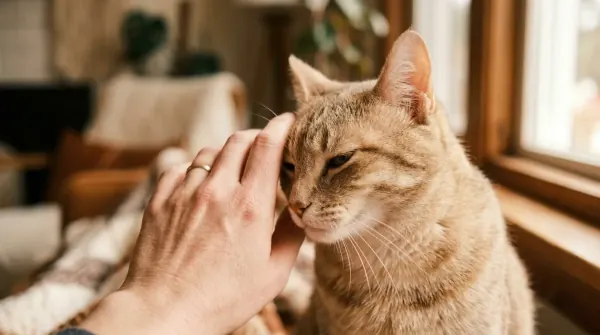
Cat Headbutting (Bunting): Meaning and Function
Cat headbutting — formally bunting — is one of the strongest affiliative signals cats give. It deposits pheromones, marks trust, and confirms social belonging.
cat-behavior · 9 min
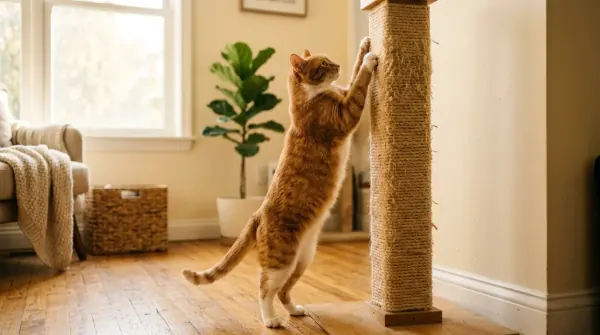
Cat Scratching Furniture: How to Redirect It
Cats scratch for four biological reasons — claw maintenance, stretching, scent marking, and stress release. Stopping it is impossible; redirection is achievable.
cat-behavior · 7 min
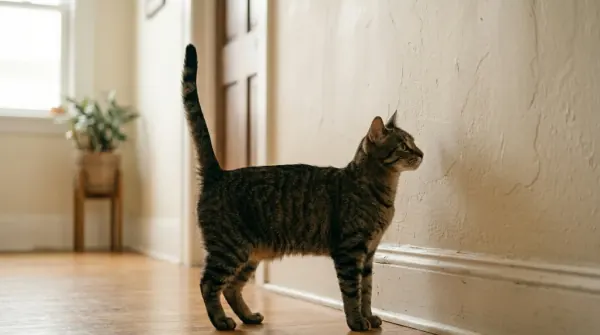
Cat Spraying vs Urinating: The Difference
Cat spraying is communicative marking — small volume, vertical surface, tail-up posture. Urination outside the box is different and is often medical, not behavioral.

cat-behavior · 10 min
Why Is My Cat Peeing Outside the Litter Box?
Cats peeing outside the box is the #1 reason cats end up in shelters — and it's almost always solvable. Half of cases are medical.

dog-behavior · 9 min
How to Introduce a New Dog to a Resident Dog
Dog introductions are easier than cat introductions, but not as forgiving as the 'throw them in the yard' method suggests. Neutral ground and pacing matter most.

cat-behavior · 9 min
How to Introduce a New Cat to a Resident Cat
Cat introductions go wrong when rushed. Cats are solitary by nature — they must learn to share territory. A staged scent-and-sight protocol prevents lifelong tension.

dog-behavior · 10 min
French Bulldog Behavior: Personality and Health
French Bulldog behavior is affectionate, low-energy, and companion-oriented — but brachycephalic anatomy and spinal issues shape realistic daily care requirements.

dog-behavior · 10 min
Golden Retriever Behavior, Personality
Golden Retrievers are highly social, food-motivated, biddable dogs with specific breed-related behavior patterns and health concerns.

cat-behavior · 10 min
Persian Cat Behavior: Personality and Care
Persian cat behavior is calm, low-activity, and affiliative — but brachycephalic anatomy drives significant breed-specific grooming, dental, and respiratory needs.

cat-behavior · 9 min
Behavior Change in Senior Cats: Medical First
Senior cat behavior change is almost always medical — hyperthyroidism, kidney disease, arthritis, and cognitive dysfunction all present as behavior change first.

dog-behavior · 9 min
Pain Signals in Older Dogs: What to Watch
Older dogs hide pain — it's a survival adaptation, and owners chronically under-detect it. Learn the postural, behavioral, and facial signs vets use to score it.

dog-behavior · 10 min
Leash Reactivity in Dogs: Causes and Fixes
Leash reactivity is the most common form of dog reactivity — and almost always misunderstood. It's a frustration or fear response, not dominance or defiance.
dog-behavior · 10 min
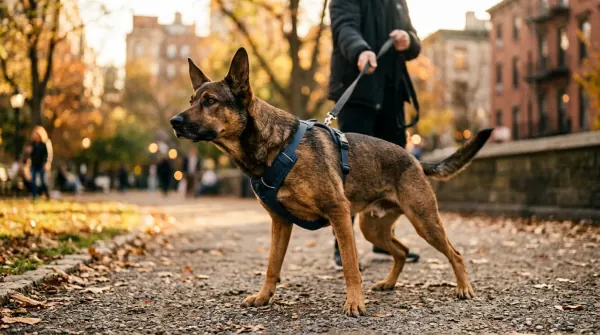
Reactive Dog vs Aggressive Dog: The Difference
Reactive dogs show big responses to triggers but rarely intend harm. Aggressive dogs are willing to escalate to harmful contact. Reading the signals precisely matters.

dog-behavior · 10 min
Dog Resource Guarding: Signs, Causes
Resource guarding is normal canine behavior — it has a survival logic. It becomes a problem when it escalates to biting in shared-living contexts.

dog-behavior · 9 min
Puppy Biting: Why It's Normal and What Helps
Puppy biting is normal and developmentally necessary — puppies learn bite inhibition through play. This guide covers what to redirect, what to ignore, and when to worry.

dog-behavior · 10 min
The Puppy Socialization Window: 3-14 Weeks
The puppy socialization window (3-14 weeks) is one of the most evidence-based periods in dog behavior. What's learned during this window sticks for life.

dog-behavior · 9 min
Puppy Body Language: How Puppy Signals
Puppy body language differs from adult dog signaling — signals are exaggerated, calming sequences are incomplete, play dominates the repertoire.

dog-behavior · 10 min
Cognitive Dysfunction in Senior Dogs: Signs
Canine Cognitive Dysfunction is the dog Alzheimer's — affecting 14-35% of dogs over 8 and widely under-diagnosed. Learn the DISHAA warning signs to catch it early.

dog-behavior · 9 min
Senior Dog Behavior Changes: Medical First
Senior dog behavior changes mimic anxiety or stubbornness but are usually medical — arthritis, cognitive dysfunction, hearing loss, or organ decline sitting underneath.

training-science · 10 min
Positive Reinforcement vs Balanced Training
'Balanced training' claims to blend positive reinforcement with aversive corrections for the 'best of both worlds.' The peer-reviewed evidence shows worse outcomes.

training-science · 9 min
The 3-3-3 Rule for Rescue Dogs: What's Real
The 3-3-3 rule (3 days, 3 weeks, 3 months) is a useful heuristic for rescue-dog adjustment — but treating it as a fixed timeline can mask real problems.
training-science · 9 min
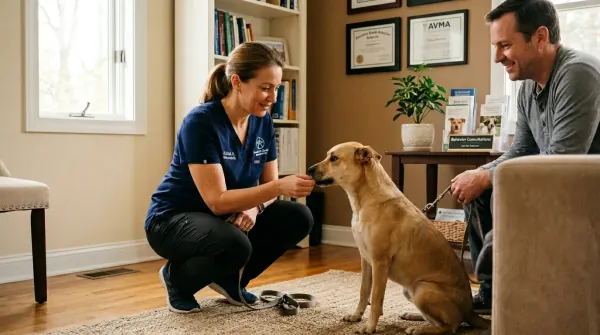
How to Find a Credentialed Pet Behaviorist
Pet behavior is an unregulated field — anyone can claim to be a trainer. This guide walks through real credentials (DACVB, CAAB, CDBC) and how to vet a practitioner.
training-science · 8 min
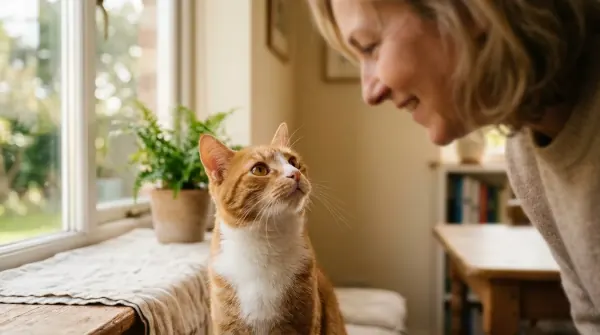
Can Cats Understand Humans? The Evidence
Peer-reviewed research shows cats recognize their names, read human emotional tone, and form secure attachments — despite the persistent 'aloof cat' stereotype.

training-science · 9 min
Can Dogs Understand Human Emotions: Evidence
Dogs read human facial expressions, vocal tone, body posture, and odor to gauge emotion. The peer-reviewed evidence is precise; popular interpretation overstates it.

training-science · 10 min
Why Dominance Theory Is Wrong in Dog Training
Dominance theory came from misinterpreted captive-wolf research the original researcher publicly retracted. It survives in dog training despite four decades of evidence.

dog-behavior · 7 min
Dog Pacing at Night: Causes and Triage Steps
Nighttime dog pacing has six distinct causes — cognitive dysfunction, pain, anxiety, medication effect, sundowning, and unmet needs. Age is the first triage filter.

cat-behavior · 6 min
Why Does My Cat Sit With Its Back to Me?
When a cat sits with its back to you, it's a documented high-trust signal — the opposite of what most humans assume, grounded in feline vigilance and predation.
cat-behavior · 6 min
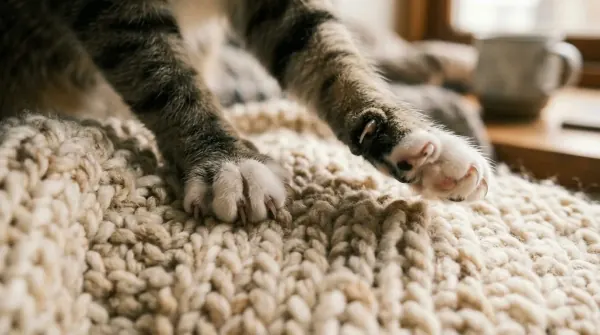
Cat Kneading Meaning: A Behaviorist Explains
Cat kneading — 'making biscuits' — is a retained kittenhood behavior linked to nursing. Adult cats keep it as a self-soothing, bonding, or territorial gesture.

dog-behavior · 7 min
Why Does My Dog Follow Me Everywhere? Signs
Most dog-following behavior is normal social bonding. Some isn't — the kind that comes with anxiety markers when you leave the room.

cat-behavior · 8 min
Cat Meowing at Night: 7 Causes and Fixes
Adult cats meow primarily at humans, and nighttime meowing has seven distinct causes — from boredom to hyperthyroidism. Here's how to tell which one applies.

dog-behavior · 10 min
Dog Separation Anxiety: Signs and Treatment
Dog separation anxiety is a clinical syndrome, not 'missing you.' Systematic desensitization and, when indicated, medication are the only interventions that work.

cat-behavior · 7 min
Cat Hiding Under the Bed: When to Intervene
Cats hide for two reasons — normal solitary-species retreat, or genuine stress. Duration, appetite, and litter-box use separate healthy from clinical hiding.

dog-behavior · 9 min
12 Signs Your Dog Is Stressed: Early Signals
Dog stress shows up in 12 specific physical signals most owners miss — because they appear before the loud ones. Here's how to read each one early.

dog-behavior · 6 min
Dog Yawning When Not Tired: The Real Reason
Out-of-context dog yawning is almost always a calming signal — a small displacement behavior that appears when a dog feels low-grade stress or social pressure.

dog-behavior · 7 min
Dog Lip Licking: Stress Signal or Anticipation
Most dog lip licking isn't hunger — it's a displacement signal that appears when a dog feels mild stress or uncertainty. Reading context tells you which cue applies.

cat-behavior · 7 min
Cat Airplane Ears: What Flattened Ears Mean
Cat airplane ears — flattened sideways like wings — can signal attentive listening, mild discomfort, or the first step before defensive arousal. Context decides.

dog-behavior · 7 min
Whale Eye in Dogs: An Early Stress Signal
Whale eye — the visible half-moon of white around a dog's iris — is one of the earliest stress signals dogs show. It routinely precedes growls, snaps, and bites.

cat-behavior · 8 min
Cat Tail Meanings: 8 Tail Positions Decoded
Cat tail positions are subtler than dog signals and more often misread. This guide decodes eight tail positions cats use and the emotional state behind each one.

dog-behavior · 9 min
Dog Tail Position Chart: Full Reference Guide
Dog tail position carries more information than the wag. A full reference to tail heights, motions, and stiffness — and the emotional state behind each one.

cat-behavior · 8 min
Why Does My Cat Slow-Blink at Me? Explained
The cat slow-blink is a documented friendly signal. Recent peer-reviewed research found cats slow-blink more when humans do — and unfamiliar humans who.

dog-behavior · 11 min
Why Is My Dog Staring at Me? Soft Gaze vs Hard Stare
A dog's stare may be social, learned, predatory or a warning. Compare soft eyes with a hard stare and learn when to give space or call a vet.