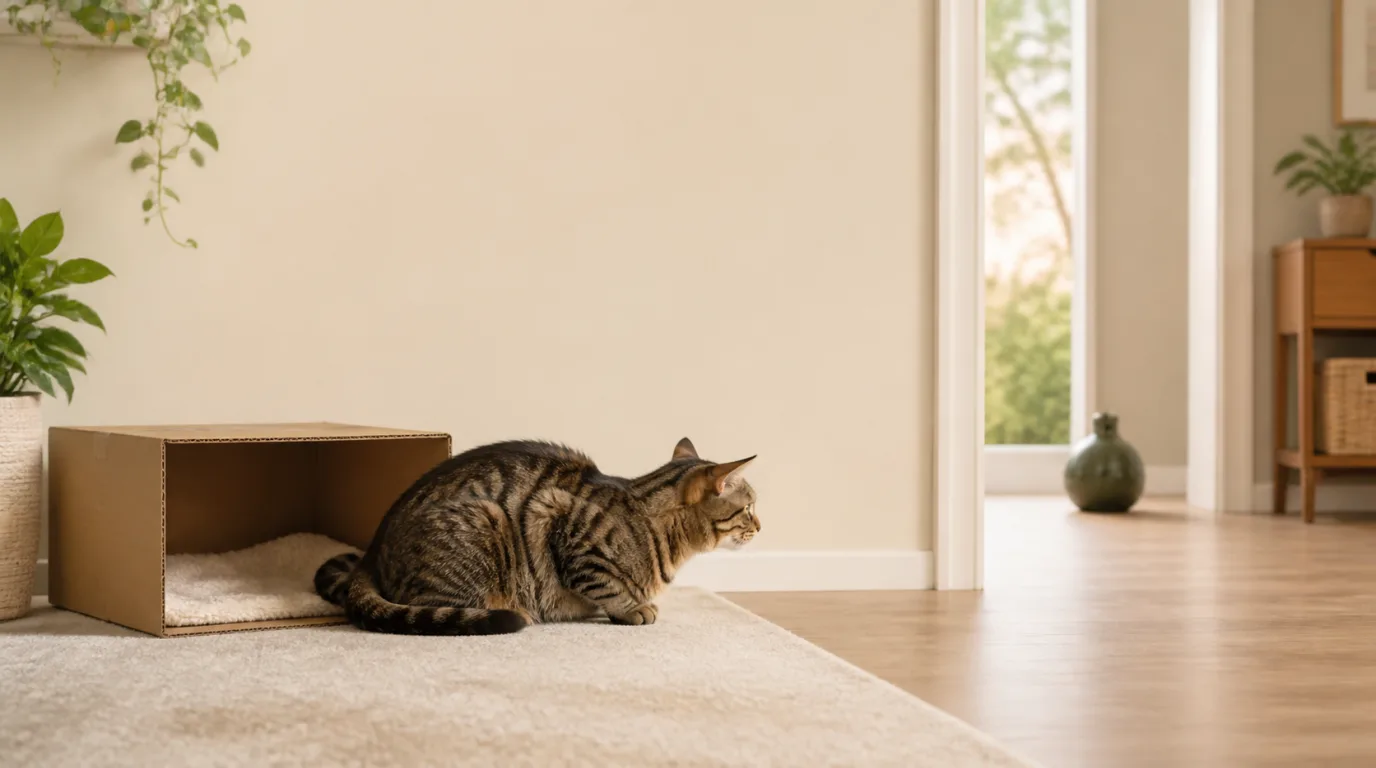
A crouching cat holds the body low and compact, but the posture does not have one meaning. A loose crouch can prepare a cat to stalk a toy. A tense crouch with the tail tucked and ears sideways may reflect fear. A hunched cat with a lowered head, squinted eyes and reduced activity may be painful.
Context decides the next step. Check what happened immediately before the crouch, where the cat's weight sits, whether the muscles look soft or braced, what the face and tail show, and how the cat moves afterward.
Crouch, loaf or hunch?
A loaf is usually a resting posture. The paws tuck beneath the chest, weight settles evenly, and the face and back remain relatively soft. The cat may doze or watch the room without looking ready to flee.
A crouch brings the body low over the feet with the limbs ready to move. Weight may shift forward for stalking or backward for escape. Muscle tension and orientation matter more than body height alone.
A hunch often includes a rounded back, lowered head and guarded abdomen. It can occur with pain or illness, but no posture diagnoses a medical problem by itself.
Long hair, body shape and camera angle can hide these differences. Compare the cat with their own normal resting and moving postures.
Six crouching contexts
| Pattern | Body and face | Context | Next step |
|---|---|---|---|
| Relaxed loaf | Soft back, paws tucked, neutral ears, partly closed eyes | Resting in a familiar place | Leave comfortable cat alone or interact if invited |
| Hunting crouch | Forward orientation, low chest, hind legs prepared, focused eyes | Toy, insect or prey movement | Redirect to safe play and manage access |
| Fear or freeze | Body compressed, weight back, tail close, ears sideways, wide eyes | Novel person, sound, carrier or blocked escape | Stop approaching and provide cover |
| Defensive crouch | Rigid body, fixed monitoring, ears flat, possible hiss or swat | Threat feels close or escape is limited | Create distance without touching |
| Pain-related hunch | Rounded back, lowered head, squint, reduced movement or grooming | Persists across settings or is newly abnormal | Veterinary assessment |
| Toileting strain | Repeated squat or crouch, frequent box visits, little output | Litter box or other toileting site | Urgent veterinary triage if little or no urine |
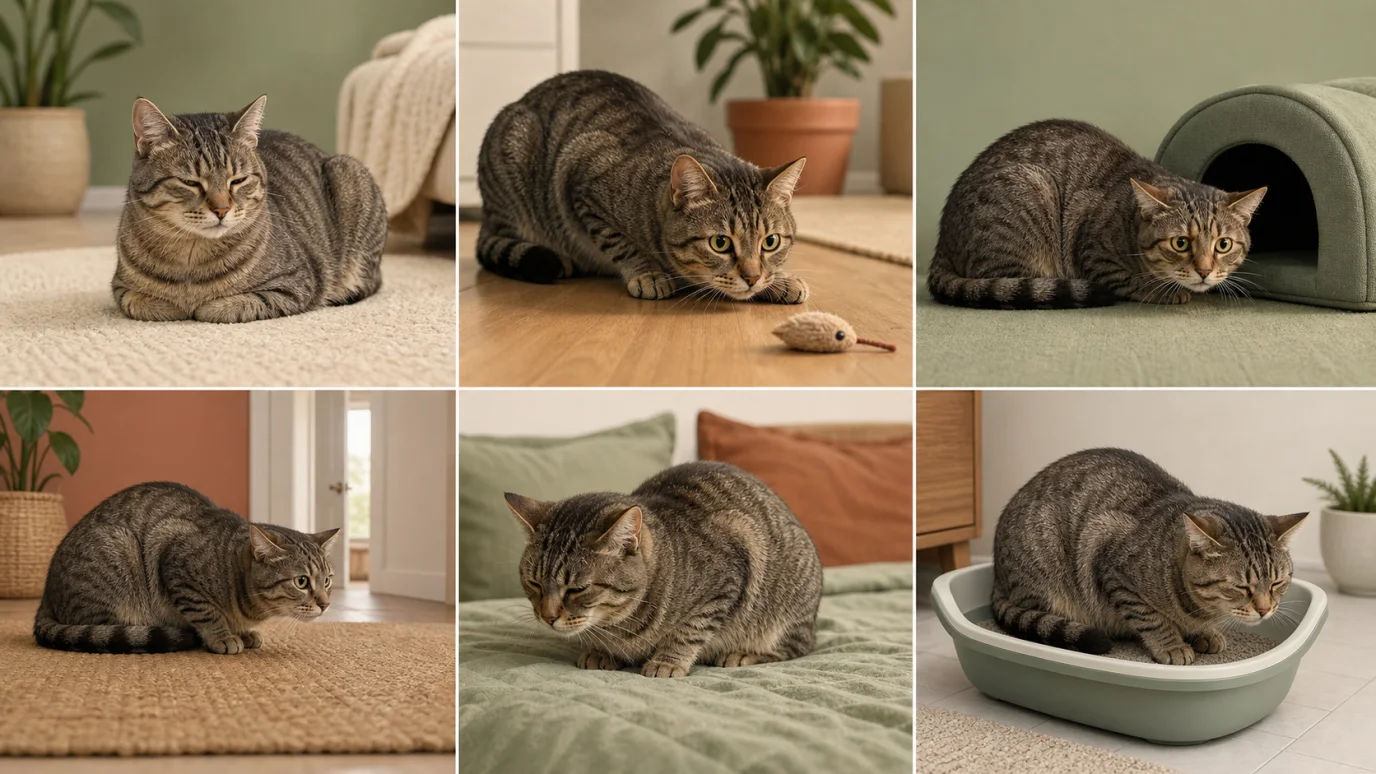
Read the face, muscles, tail, trigger and next movement. Similar body height can conceal very different situations.
Fearful crouching
A frightened cat often lowers their profile while keeping the feet ready to escape. The tail may wrap tightly or tuck beneath the body, ears rotate sideways, pupils enlarge and whiskers draw back. The cat may lean away, freeze or press toward cover.
Do not reach in to reassure the cat. Turn sideways, lower noise, block visual pressure and make an exit or hiding place available. If the cat chooses to remain still, give time. Picking up a crouched cat removes the option to flee and can produce defensive scratching or biting.
The broader cat stress guide covers hiding, appetite, grooming and routine changes that may accompany the posture.
Defensive crouching
Fear and defense overlap. Concern increases when the low body becomes rigid, gaze fixes, ears flatten, fur lifts, the tail lashes or a growl, hiss or swat appears. The cat may be preparing to defend because retreat feels unavailable.
Stop movement and create distance. Do not stare, punish the warning or block the doorway. Use a barrier from a safe distance if people or animals must be separated.
A crouched cat is not automatically “submissive.” That label can encourage people to approach when the cat is communicating discomfort. Describe what is visible and respond to risk.
Hunting and play crouches
During stalking, the chest stays low while weight often loads toward the hindquarters. The ears and whiskers generally orient toward the target, the eyes track movement, and the tail may stay low with a small tip twitch. The cat then creeps, wiggles the hindquarters or pounces.
This is normal predatory behavior. Use wand toys and toss toys away from hands. Do not encourage attacks on feet or fingers. If one cat stalks another, look for reciprocity, pauses and role changes. The cats playing or fighting guide helps separate shared play from one-sided pressure.
Fear can coexist with forward attention. A cat watching an uncertain object may look ready to pounce while also keeping weight back. The behavior after the object moves is more useful than the frozen frame.
When crouching may indicate pain
Veterinary pain guidelines include crouched or hunched posture among many possible feline pain behaviors. Other clues include:
- lowered head and squinted eyes
- reduced movement, jumping or play
- hiding or withdrawal
- reduced appetite or grooming
- guarding one area or reacting to touch
- abnormal gait or reluctance to use stairs
- restlessness or inability to settle
- changed litter-box use
Pain assessment uses posture, face, activity, interaction and change from baseline together. Do not press the abdomen or repeatedly touch a suspected sore area. A cat who eats or purrs can still be painful.
New or persistent hunched posture warrants veterinary advice. Senior cats often show pain through reduced normal behavior rather than limping; see the guide to behavior changes in senior cats.
Litter-box crouching can be an emergency
A cat repeatedly entering the box, crouching or straining and producing no urine or only drops may have a urethral obstruction. Male cats are at higher risk, but any cat with urinary difficulty needs prompt assessment.
The guide to urination outside the litter box explains the medical-first triage for less acute changes. A photo of posture cannot confirm urine output, so inspect the box and report the timing and amount.
Breathing-related crouching
A cat in respiratory distress may crouch with the neck extended, elbows held away from the chest and effort visible through the abdomen. Open-mouth breathing in a resting cat is an emergency.
Minimize handling and travel to emergency care. Do not place the cat on their back, compress the chest or create extra stress by repeatedly filming.
A 30-second observation
Without approaching, note:
- location and immediate trigger
- whether weight is forward, back or evenly settled
- muscle softness versus rigidity
- ears, eyes, whiskers, mouth and tail
- breathing rate and effort
- willingness to move and the quality of movement
- eating, grooming and litter-box changes
Record when the posture began and how often it occurs. Short video of the transition into standing or walking is often more useful to a veterinarian than a single photograph.
What a photo or video can show
A clear side view can show body height, back curve, head position, limbs, tail and facial tension. It cannot show pain location, breathing safely in every case, urine production or the motivation behind a stalk.
PetTranslator.ai can list visible markers and possible contexts. It cannot diagnose pain, urinary obstruction or respiratory distress. Urgent signs override image analysis.
Frequently asked questions
Why is my cat crouching and staring at me?
They may be uncertain, defensive, focused on movement or waiting for something learned. If the body is tense, ears turn sideways or the tail stays tight, stop approaching and provide an exit.
Is a cat loaf the same as crouching?
Not exactly. A loaf is typically settled rest with paws tucked and soft muscles. A crouch keeps the limbs positioned for movement and may show forward or backward weight shift.
Does a hunched cat always have pain?
No, but a new persistent hunch with lowered head, squinting, reduced activity, appetite change or altered movement warrants veterinary assessment.
Why does my cat crouch before pouncing?
Lowering the body helps conceal the approach and loads the hind limbs for a pounce. Forward ears, focused eyes and a toy or prey target support a hunting interpretation.
When is crouching an emergency?
Seek emergency care for repeated straining with little or no urine, open-mouth breathing, marked breathing effort, collapse, severe weakness, major trauma or obvious severe pain.
Sources
- Steagall et al. ISFM consensus guidelines on acute pain in cats.
- AAHA/AAFP pain management guidelines for dogs and cats.
- Merola and Mills. Behavioral signs of pain in cats.
- Evangelista et al. Ethogram of acute pain behaviors in cats.
- Rodan. Behavioral awareness in the feline consultation.
- VCA Animal Hospitals. Cat behavior problems: fears and phobias.
Khabir Mughal is the founder of PetTranslator.ai. This article was researched against feline pain, behavior and handling guidance. It was last reviewed on August 18, 2026.