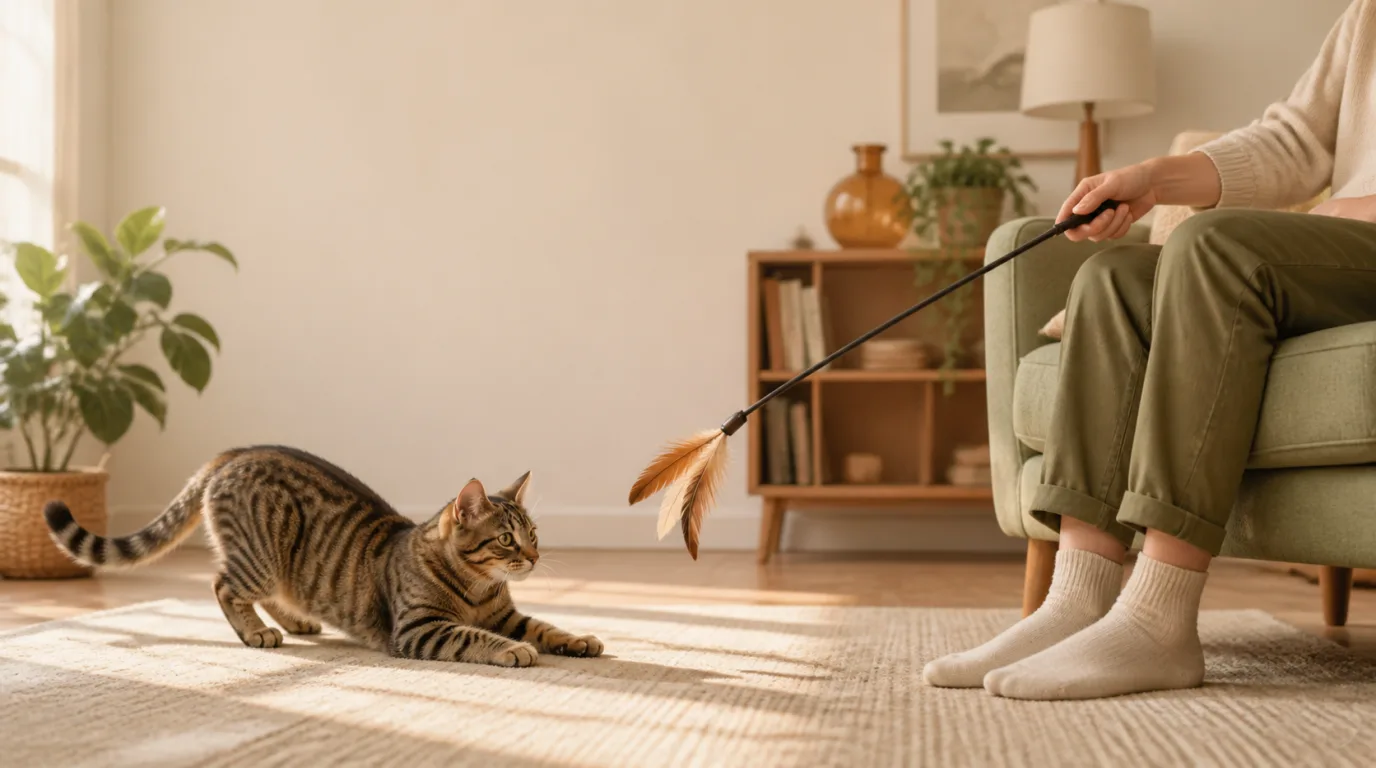
A cat waits behind the sofa, launches at your ankle, wraps both front legs around it and bites. A minute later, the same cat looks relaxed and ready to go again. This pattern is often called cat play aggression. The behavior can hurt, but the cat is usually performing a normal stalking and capture sequence with an inappropriate target.
That distinction matters. The answer is not to punish the cat for playing. It is to protect people, stop making skin part of the game, and give the cat safer ways to stalk, chase, grab and bite.
Is it play aggression?
Play aggression usually has several of these features:
- The cat stalks moving hands, feet or ankles, often from behind furniture or around a doorway.
- The approach is quiet and focused rather than accompanied by growling or prolonged hissing.
- The cat pounces, grabs, bites or kicks, then releases and may return for another round.
- The body looks springy and active, not rigid with sustained defensive tension.
- The behavior is most common in kittens, adolescents and active young adults.
- It appears around predictable high-energy times or when people start moving through the home.
The word aggression describes the impact on the person. It does not prove an angry emotional state. Feline play borrows movements from hunting and fighting, so a playful cat can still leave scratches or punctures.
Play is less likely when the cat is cornered, trying to escape, growling continuously, flattening the ears tightly, puffing the coat, or reacting to touch on a painful area. Biting that starts during stroking fits the patterns in cat love bites and petting overstimulation more closely. An attack immediately after the cat sees an outdoor animal may be redirected aggression.
A single paw strike needs the same context check; the guide to why cats slap with their paws separates playful investigation from a request for distance. Brief tail chasing can also be play, but repeated hard attacks on the tail need a medical differential.
Why cats ambush hands and ankles
Stalking, chasing, pouncing and biting are normal parts of feline predatory behavior. Indoor life does not remove those behavioral needs. It only changes the available targets.
A moving ankle is small, fast and conveniently close to the floor. Fingers wiggled under a blanket behave like hidden prey. If either produces an exciting chase, the cat learns that human bodies make the game happen.
Several factors can contribute:
Hands were used as toys. A kitten wrestling with fingers can seem harmless. The same rehearsed behavior hurts much more when the cat is larger. Every successful grab makes skin a more established play target.
The cat lacks suitable outlets. A few toys lying still on the floor may not reproduce the movement, concealment and capture that make predatory play engaging. Variety and presentation matter.
The timing is predictable. Some cats ambush people before meals, after a long quiet period or during an evening activity burst. A simple log often reveals a pattern that felt random.
Movement has become the cue. Pulling a hand away quickly or running past the cat can intensify pursuit. This is not the person's fault, but it explains why dramatic reactions can keep the loop going.
Social learning was limited. Kittens learn bite inhibition and play boundaries through early interaction with their mother and littermates. Early separation can contribute, but it is not a diagnosis and does not mean the behavior cannot improve. See the kitten socialization window for the broader developmental picture.
Play aggression or something else?
Look at what happened immediately before the bite, the whole body and what the cat does afterward.
| Pattern | Typical trigger | Body and aftermath | Better starting point |
|---|---|---|---|
| Play aggression | Moving feet, hands, corners, high-energy periods | Quiet stalk, pounce and grab; cat stays engaged or resets quickly | Change play targets and provide appropriate outlets |
| Petting-induced aggression | Repeated touch | Tail flick, skin ripple, head turn or body stiffening before the bite | Shorter touch and consent tests |
| Fear or defensive aggression | Approach, restraint, blocked escape | Crouching, retreat, flattened ears, hissing or swatting to create distance | Stop approaching and restore choice |
| Redirected aggression | Unreachable cat, animal, sound or other arousing event | Sudden intense arousal toward a nearby person or pet | Separate safely and allow full de-arousal |
| Pain-related aggression | Touch, lifting, jumping or movement | New avoidance, sensitivity or change from baseline | Veterinary examination |
A photograph can help you inspect ears, pupils, whiskers and weight distribution, but behavior is a sequence. If it is safe, record the moments before and after an episode. Our broader cat body language guide explains how to read those signals together.
What to do during an ankle ambush
Safety comes first. Do not reach down to pull the cat off with bare hands.
- Stop moving if you safely can. Fast kicking or pulling can make the target behave more like prey and may deepen scratches.
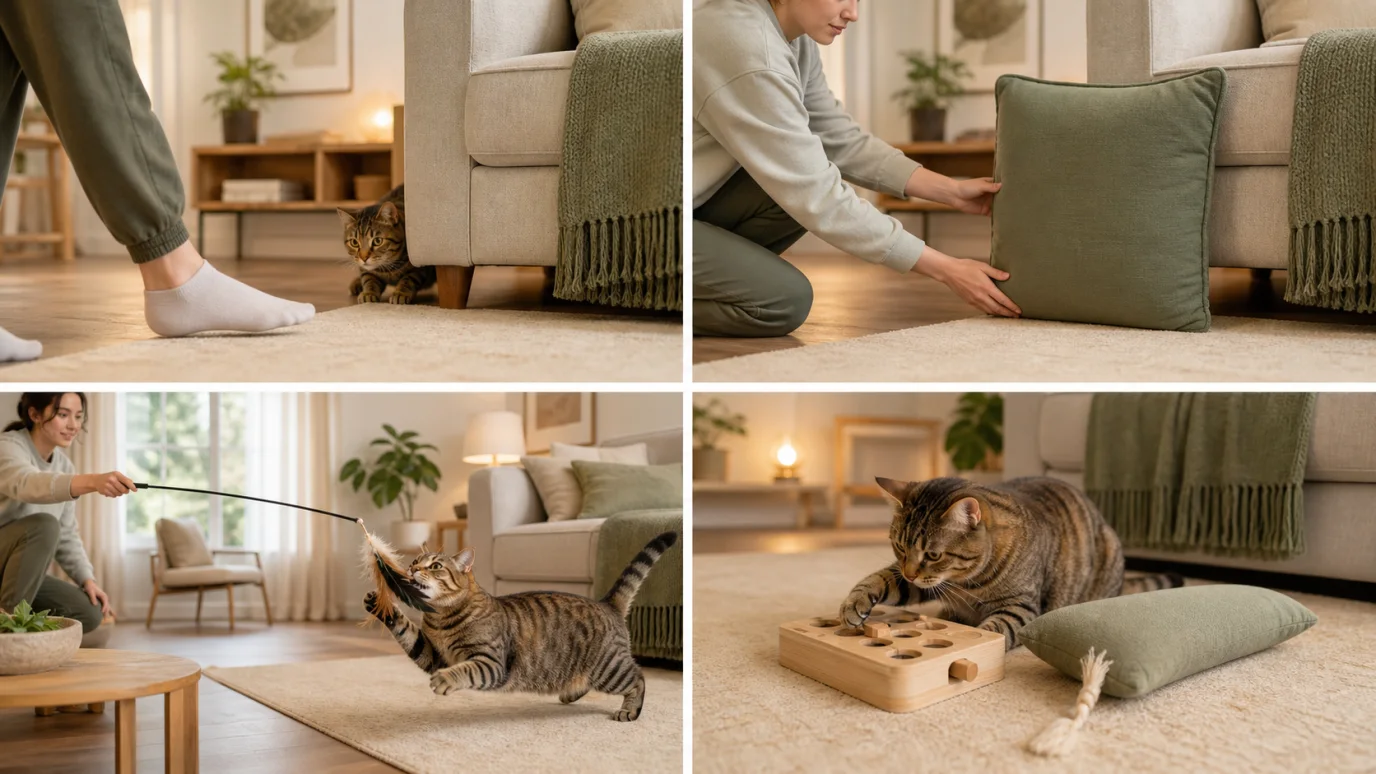
- Put an object between you and the cat. A cushion, folded towel, piece of cardboard or laundry basket can block access without using force.
- Create distance calmly. Step behind a door or barrier once the cat releases. Give the cat space to settle.
- Check for injury. Wash scratches. If teeth break the skin, especially on a hand or near a joint, contact a medical professional promptly because cat bites can become infected.
Do not immediately produce a favorite toy every time teeth touch skin. For some cats, that sequence teaches that biting a person starts a game. Instead, schedule play before the usual ambush window and use early cues, such as watching from a known hiding place, to begin an appropriate activity before contact occurs.
A practical prevention plan
1. Retire hands and feet from play
Everyone in the household needs the same rule: skin never acts as prey. Do not wiggle fingers, wrestle with hands or move feet under bedding for the cat to catch.
Use toys that keep distance between teeth and people. Long wand toys support stalking and chasing. A large soft kicker toy gives the cat something appropriate to grab, bite and rake with the hind legs. Inspect toys regularly, and put string or ribbon toys away when nobody is supervising.
2. Make interactive play look like prey
Drag a wand toy away from the cat, briefly hide it behind furniture, pause, then move it again. Prey generally moves away rather than toward a hunter's face. Let the cat catch the toy regularly. A game made of endless failed captures can be frustrating.
There is no universal number of minutes that suits every cat. Start with brief sessions the cat can complete without becoming frantic, and use behavior rather than a timer. Slower pursuit, lying down, grooming or walking away can signal that the session is over.
3. Get ahead of the pattern
For one week, record:
- time and location of each ambush
- what the person was doing
- what the cat had been doing beforehand
- meals, play and other stimulating events nearby
- intensity and any injury
If attacks cluster around 8 p.m. in the hallway, arrange suitable play shortly before that time and temporarily change the route or remove the ambush cover. Prevention gives the cat practice with the right target. Waiting for a bite gives more practice with the wrong one.
4. Add independent hunting opportunities
Food puzzles, hidden portions of an appropriate daily ration, sturdy balls, toy mice, cardboard boxes and safe climbing routes can add choice beyond human-led play. Introduce food puzzles at an easy level so the cat succeeds, and account for the food in the cat's normal diet.
Rotate some toys instead of presenting everything permanently. Novelty can restore interest, while familiar favorites can remain available if the cat uses them safely.
5. Reinforce calm alternatives
Notice what happens before the pounce. If the cat pauses on a mat, approaches without grabbing, or turns toward a toy, calmly reward that choice. A tossed treat or toy can move activity away from legs while keeping hands at a safe distance.
The timing is important: reward the alternative behavior, not the bite that preceded it. If the cat is already highly aroused, prioritize distance and de-arousal.
Mistakes that can make it worse
Punishing the cat. Yelling, hitting, scruffing, spray bottles and startling devices can add fear without teaching a safe play skill. They can also make the person or location predict something unpleasant.
Using another cat as a solution. A second cat is not a treatment. Compatibility is individual, introductions require care, and an unwilling housemate can become the target. If two cats are involved, use the reciprocity and aftermath checks in cats playing or fighting.
Running away or yanking free. Sudden movement may intensify pursuit and can worsen injury. Use stillness and a barrier when safe.
Keeping every toy available all the time. Objects that never move or change may lose value. The way a toy is presented often matters more than the number owned.
Assuming every bite is play. A relaxed-looking cat can still be in pain, frightened or over threshold. Context decides the category.
When to involve a vet or behavior professional
Arrange a veterinary examination when aggression begins suddenly, becomes much more intense, follows touch or movement, or appears with hiding, appetite change, reduced jumping, altered grooming or litter-box changes. Pain, skin disease, dental disease and other medical problems can change tolerance and activity.
Get qualified behavior help when injuries continue, children or vulnerable adults are at risk, triggers are unclear, or careful management and enrichment are not improving the pattern. A veterinary behaviorist or credentialed feline behavior consultant can build a plan around the individual cat and household.
The useful reframe
The cat does not need to stop stalking, chasing, grabbing and biting. The cat needs safe targets, predictable opportunities and clear boundaries around human skin.
That is why punishment is such a poor fit. It addresses the frightening moment without meeting the behavior underneath it. A better plan changes what the cat can rehearse: fewer successful ankle ambushes, more successful captures of appropriate toys, and more ways to use energy independently.
If you are unsure which pattern you recorded, PetTranslator.ai can organize visible posture markers from a photo or short video and separate observation from interpretation. It cannot diagnose pain or aggression, but it can help you prepare clearer notes for a veterinary or behavior conversation.
Sources
- AAFP and ISFM Feline Environmental Needs Guidelines: predatory play, wand toys, capture opportunities, feeding enrichment and avoiding hand-and-foot play.
- Environmental Enrichment for Indoor Cats: peer-reviewed guidance linking body-part play with owner-directed play aggression and recommending distance toys.
- Merck Veterinary Manual: Behavior Problems in Cats: clinical overview of feline behavior problems, including play aggression.
- Owner-Directed Feline Aggression: veterinary behavior framework for triggers, enrichment and behavior modification.
Khabir Mughal is the founder of PetTranslator.ai. This guide was checked against feline environmental-needs and veterinary behavior sources before publication.