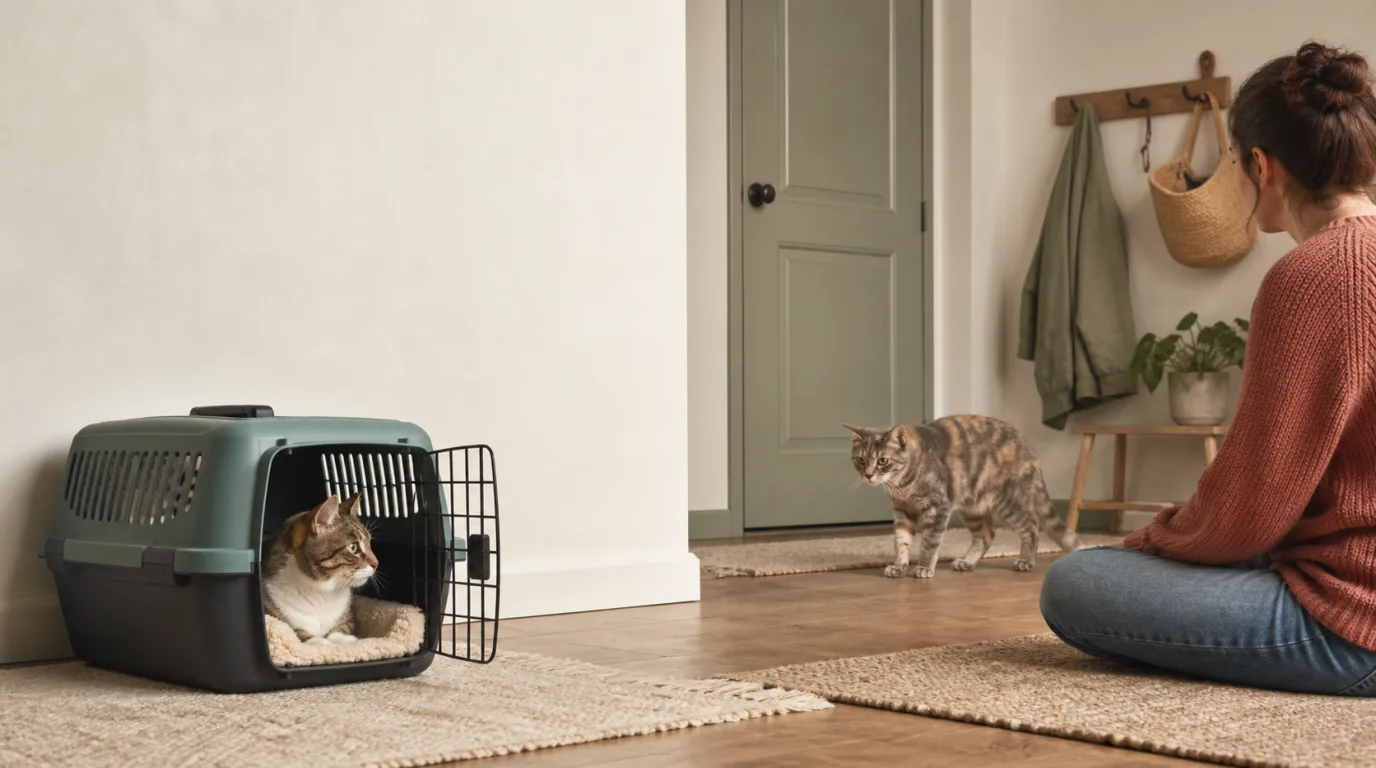
Cat non-recognition aggression is a sudden fearful or hostile response to a familiar housemate who returns smelling, looking or behaving differently. It often follows a veterinary visit. If one cat hisses, stares, blocks, swats or chases, separate them calmly and let the returning cat recover in a prepared room. Do not force a reunion to prove they still know each other.
The name is convenient, but it does not prove that the resident cat has literally forgotten the other cat. Familiar recognition uses several cues. Clinic odor, stress, changed movement, pain, medication, anesthesia, grooming and time apart can all alter the reunion.
Why cats may react after a vet visit
Cats gather social information through scent, posture, movement and prior experience. A returning cat may carry disinfectant, medication, other-animal and unfamiliar-human odors. Their own odor may also change with stress, illness or grooming.
The cat may walk unsteadily after sedation, wear a bandage, have a shaved area or move defensively because something hurts. The cat who stayed home can also be aroused by the carrier, clinic smells or memories of their own past visits.
None of this makes either cat spiteful. The resident cat is responding to unfamiliar or concerning information. The returning cat may then hiss back because they are sore, frightened or cornered. One bad interaction can turn initial uncertainty into a learned conflict.
Before opening the carrier
Prepare a quiet recovery room with litter, water, food as medically appropriate, a hiding place, bedding and the open carrier. Follow the clinic's discharge instructions first, especially after anesthesia, surgery or contagious illness.
Bring the carrier inside without allowing other pets to crowd it. Observe from a distance:
- Does the resident cat approach loosely, or crouch and stare?
- Are either cat's ears flattened, pupils enlarged or tail lashing?
- Is the returning cat alert and coordinated?
- Does either cat hiss, growl, swat the carrier or block the exit?
If both cats remain soft and familiar, a supervised homecoming may be uneventful. At the first tension signal, take the carrier into the recovery room and close the door before opening it. Do not carry the returning cat through a hostile greeting in your arms.
What to do if hissing or fighting starts
- Keep hands and faces away from both cats.
- Use a door, large cardboard panel or other solid barrier from a safe distance.
- Place each cat in a separate area with their own resources.
- Reduce noise, visual contact and household traffic.
- Check both cats for injury without forcing handling.
- Contact the veterinarian about the returning cat's recovery or any wounds.
Do not punish hissing. It is distance-increasing communication. Shouting, spraying water or forcing proximity can make the other cat predict worse events.
How long should they stay separated?
Use recovery behavior, not a fixed clock. A mild hiss may resolve after quiet decompression. An anesthetized, painful or highly aroused cat may need much longer.
The returning cat should be coordinated, eating as expected for the procedure, using the litter box, resting and following discharge milestones. The resident cat should move normally, stop camping at the door and respond neutrally to household sounds and the other cat's scent.
Call the clinic if sedation seems excessive, balance does not improve as instructed, pain appears uncontrolled, the cat repeatedly vomits, has trouble breathing, cannot urinate, will not eat within the advised window or disrupts an incision. Do not speed up reunion while medical recovery is uncertain.
A gradual reintroduction
If either cat remains tense, treat the reunion like a shortened new introduction:
- Maintain complete visual separation while both cats settle.
- Exchange bedding or resting mats only if each cat can investigate voluntarily without distress.
- Offer meals, treats or play on opposite sides of a closed door at a comfortable distance.
- When door-area behavior stays loose, allow brief views through a secure screen or tall gate.
- Progress to short supervised sessions in a room with vertical space and multiple exits.
- End while both cats are calm. Step back if staring, stalking, blocking, growling or chasing returns.
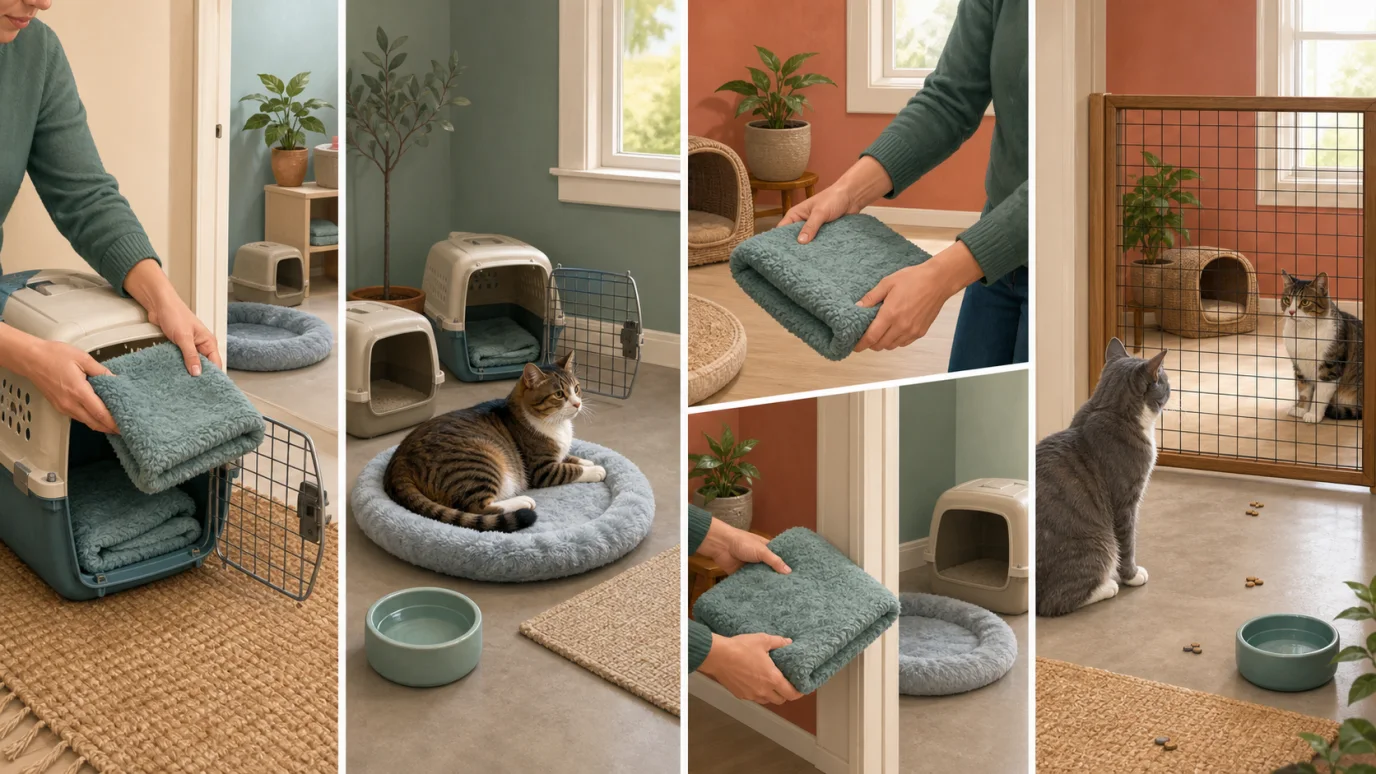
Recovery comes before reunion. Each stage advances only when both cats remain comfortable.
The full cat introduction guide explains resource setup and barrier sessions. A previously friendly pair may move faster, but their history does not justify skipping visible tension.
Scent exchange without adding stress
Familiar bedding can preserve continuity and give each cat optional scent information. Place it in the environment rather than rubbing it onto a cat who cannot leave. Stop exchanging an item if it produces fixed staring, growling, avoidance or marking.
Do not bathe the returning cat solely to remove clinic odor. Bathing adds restraint, unfamiliar products and more scent change, and it may conflict with procedure aftercare. Do not apply perfumes or essential oils. Many scented products are irritating, and some are unsafe for cats.
Some advice recommends rubbing both cats with the same towel. That may be tolerated by relaxed cats, but forced rubbing can create another negative interaction. Voluntary contact with shared resting materials is the safer default.
Preventing trouble at the next visit
- Condition carriers as everyday resting places with cat carrier training.
- Put familiar, washable bedding in the carrier.
- Ask the clinic about feline-friendly waiting, handling and pre-visit medication.
- Prepare a recovery room before leaving home.
- Bring the cat inside without a crowd of pets at the carrier.
- Follow anesthesia, isolation and wound-care instructions before social reunion.
- Observe through distance or a barrier at the first reunion.
Taking both cats to the clinic is not automatically helpful. It can expose the healthy cat to unnecessary travel and stress. Ask your veterinarian about the individual household and use separate carriers whenever cats travel.
Non-recognition versus redirected aggression
In non-recognition aggression, the returning familiar cat has changed in scent, appearance or behavior. In redirected aggression, a separate event such as an outdoor cat or loud noise raises arousal, which is then directed at a nearby target.
The two can overlap. A clinic smell may arouse the resident cat, and the returning cat may redirect pain or fear when approached. The immediate response remains separation and calm recovery, but identifying the trigger improves prevention.
Do not assume every post-vet conflict is non-recognition. Pain, illness, resource competition and an already fragile relationship may become visible at the same time. Compare the cats with their earlier baseline and arrange veterinary assessment for sudden or persistent aggression.
When to get behavior help
Seek qualified help if there is injury, repeated charging, inability to manage safe separation, conflict lasting beyond medical recovery, or no progress through gradual reintroduction. A veterinary behavior professional can assess pain, anxiety and household dynamics together. Our credential guide explains appropriate qualifications.
What a photo or video can show
A photo can show ear position, pupils, tail, muscle tension and distance. It cannot establish why recognition changed or whether a cat is painful or sedated.
A short, safely recorded homecoming sequence may show which cat reacts first, but do not keep filming during escalation. PetTranslator.ai can organize visible markers and possible contexts. It cannot diagnose non-recognition aggression or approve a post-procedure reunion.
Frequently asked questions
Do cats forget each other after a vet visit?
Usually the relationship has not been erased. One cat is reacting to changed scent, movement, appearance, arousal or context. Calm separation and gradual familiarization often restore normal interaction.
Should I leave the returning cat in the carrier?
Use the carrier briefly to observe from a safe distance only when both cats are calm. Do not let another cat surround, swat or stare into it. Move the carrier to a separate room before opening if tension appears.
How long does non-recognition aggression last?
It may resolve in hours or require a staged reintroduction over days or longer. Procedure recovery, severity of the first conflict and each cat's behavior matter more than a fixed deadline.
Will familiar scent fix it immediately?
Familiar bedding may help, but scent is only part of the picture. Pain, sedation, fear and a learned association can remain after clinic odor fades.
Can I put the cats together and let them work it out?
No. Fighting can cause injury and strengthen fear. Separate at early tension and rebuild contact gradually.
Sources
- Rodan et al. AAFP and ISFM feline-friendly handling guidelines.
- AAFP. Feline behavior guidelines.
- Cornell Feline Health Center. Feline behavior problems: aggression.
- Merck Veterinary Manual. Behavior problems of cats.
- Anti-Cruelty. Aggression after a vet visit.
- Ramos. Aggression in multi-cat households.
Khabir Mughal is the founder of PetTranslator.ai. This article was researched against feline-friendly handling, veterinary behavior and multi-cat household guidance. It was last reviewed on August 18, 2026.